Indonesia’s second-largest ethnic group rarely gets the international spotlight that Javanese or Balinese culture receives, despite numbering in the tens of millions and holding one of the country’s most distinctive philosophical traditions. Sundanese culture West Java communities have preserved centers on something refreshingly simple: three paired words meant to govern how people treat each other in daily life. For the wider context, see our Ultimate Guide to Understanding Indonesia.
Sundanese refers to the ethnic group native to the highlands and lowlands of West Java, Indonesia’s second-largest ethnic group after the Javanese. While closely neighboring Javanese culture geographically, Sundanese identity maintains its own language, artistic traditions, and social philosophy, distinct enough that Sundanese cultural figures have historically emphasized having their own language and worldview as evidence of what one scholar called “a very high civilization.” At the center of Sundanese social life sits a three-part philosophy — silih asih, silih asah, silih asuh — loosely translating to loving, sharpening, and nurturing one another, functioning as a practical guide for maintaining harmony in daily community life.
Why It Matters
Understanding Sundanese culture offers a genuinely useful counterpoint to the more internationally recognized Javanese and Balinese traditions covered elsewhere in Indonesian cultural discussion. Recognizing Sundanese identity as distinct — with its own language, values, and artistic forms — corrects a common flattening of West Java into simply “near Jakarta” or “similar to Java.” The silih asih, silih asah, silih asuh philosophy also offers real insight into how Indonesian regional cultures encode social harmony directly into everyday language and behavior, not just formal religious or ceremonial teaching.
Cultural Context
Several elements define Sundanese cultural identity:
- Silih asih, silih asah, silih asuh — this three-part philosophy translates roughly to “loving each other,” “sharpening/educating each other,” and “nurturing/caring for each other,” functioning as a practical guide for maintaining social harmony, mutual respect, and tolerance in Sundanese community life, including in ethnically mixed settings like Bandung’s Chinese-Sundanese neighborhoods.
- Sunda wiwitan — an indigenous traditional belief system centered on nature and ancestral spirit reverence, still maintained by some Sundanese communities alongside a majority Muslim identity, reflecting genuine internal religious diversity within the broader Sundanese population.
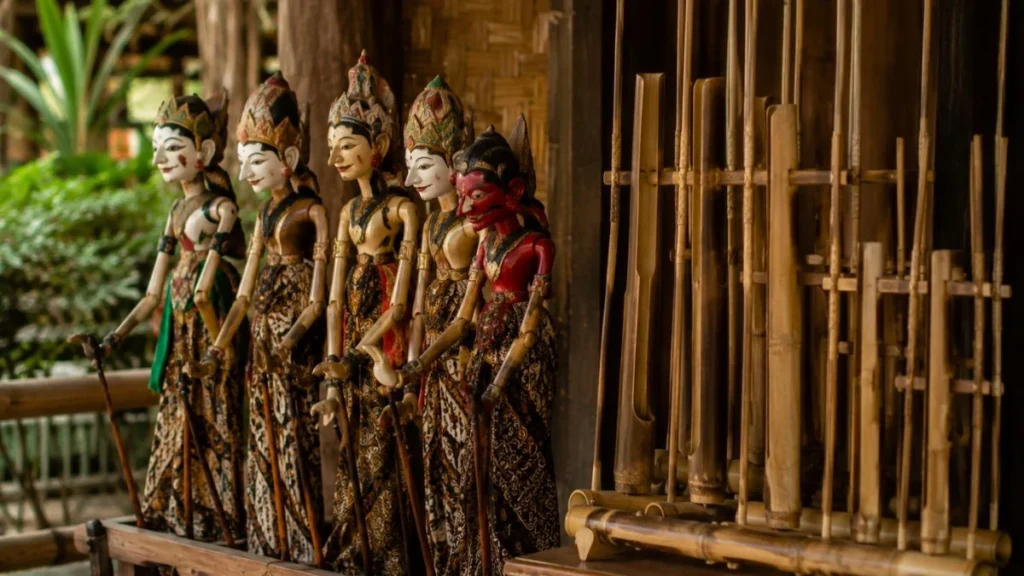
- Distinctive performing arts — Sundanese culture includes wayang golek (three-dimensional wooden rod puppetry, distinct from Central Java’s flat leather wayang kulit), jaipongan (a dynamic, rhythmic traditional dance), and tari topeng (mask dance depicting folklore and historical narratives).
- Bamboo-based music — instruments including angklung, calung, and suling (bamboo flute) form the backbone of traditional Sundanese musical performance, often accompanying village celebrations and rituals.
- Agricultural ceremonial life — traditions like Seren Taun (a harvest gratitude festival) and Nyalin (a pre-harvest rice-seed selection ritual) reflect Sundanese society’s deep agrarian roots, blending older Hindu-influenced practices with contemporary community life.
- Munggahan — a distinctly Sundanese pre-Ramadan tradition marking spiritual preparation for the fasting month, held on the eve of Ramadan’s start.
Historical Background
Sundanese cultural identity, referred to by some scholars as Kasundaan, developed across West Java’s highlands and lowlands over many centuries, historically centered on kingdoms including the Hindu-influenced Sunda Kingdom that predated widespread Islamic influence in the region. Academic interviews with Sundanese cultural figures describe Kasundaan through the concept of tritangtu — a foundational value holding that humans must maintain proper relationships both with other humans and with nature, directly expressed through the silih asih, silih asah, silih asuh framework still taught and referenced today.
As Islam spread through West Java, it layered onto, rather than fully replaced, existing Sundanese belief systems, a pattern reflected in the continued presence of Sunda wiwitan communities alongside the Muslim majority. Sundanese inheritance customs offer one specific example of this pre-Islamic influence persisting: unlike many other patrilateral-influenced Indonesian traditions shaped more heavily by Islamic inheritance norms, Sundanese custom has historically maintained more equal inheritance rights and funeral cost obligations between sons and daughters, a distinction scholars link to older, pre-Islamic Sundanese social structure rather than later religious influence alone.
Regional Differences
- Bandung, West Java’s provincial capital, functions as a major hub for Sundanese arts, education, and modern cultural expression, including significant Chinese-Sundanese cultural integration documented in academic research on the city’s diverse neighborhoods.
- Rural West Java villages, such as Cibuntu Village in Kuningan Regency, more visibly preserve agrarian traditions like Seren Taun and communal practices reflecting the silih asih, silih asah, silih asuh philosophy in daily cooperative life, including shared livestock care.
- Garut and Sumedang, among other West Java regencies, maintain their own local documentation and preservation of Sundanese moral and philosophical texts, including historical manuscripts like the Sewaka Darma text studied at the Kabuyutan Ciburuy site in Garut.
- Sunda wiwitan communities specifically persist in scattered traditional villages, representing a smaller but culturally significant thread of pre-Islamic Sundanese spiritual practice within the broader Muslim-majority population.
Practical Guide
If you want to experience Sundanese culture directly:
- Visit Bandung for accessible cultural immersion. The city offers wayang golek performances, angklung venues, and a strong contemporary Sundanese arts scene alongside its role as West Java’s capital.
- Look for jaipongan or tari topeng performances. These dance forms offer a vivid, accessible entry point into Sundanese performing arts distinct from Javanese traditions.
- Ask about Seren Taun if visiting during harvest season. Rural West Java communities celebrating this festival often welcome respectful visitors interested in the ceremony’s music, ritual, and community significance.
- Recognize Sundanese as its own language, not a Javanese dialect. Approaching Sundanese identity as genuinely distinct, rather than a regional variant of Javanese culture, reflects a more historically accurate understanding.
Common Misunderstandings
“Sundanese culture is just a regional variant of Javanese culture.” Sundanese identity includes its own distinct language, philosophical framework, and artistic traditions — historically emphasized by Sundanese cultural figures themselves as evidence of a genuinely separate civilization, not a subset of Javanese identity.
“All Sundanese people are Muslim in the same way.” While the majority are Muslim, some communities maintain Sunda wiwitan, an indigenous belief system centered on nature and ancestral spirits, reflecting real internal religious diversity within Sundanese society.
“Silih asih, silih asah, silih asuh is just a saying, not a practiced value.” Academic research shows this philosophy remains actively applied in daily Sundanese community life today, from village-level cooperative traditions to formal integration into character education programs in West Java schools.
Sundanese culture offers a genuinely rich, distinct regional identity within Indonesia — one built around a specific philosophy of mutual care, its own performing arts traditions, and agricultural ceremonies with roots stretching back centuries. Understanding it corrects a common oversight in how West Java gets discussed, revealing a culture with its own worldview standing confidently alongside, not beneath, its better-known Javanese and Balinese neighbors.
For related reading, see Wayang Kulit Meaning: Shadow Puppetry and Angklung: Indonesia’s UNESCO-Listed Bamboo Instrument, or browse the full Regional Cultures pillar.
FAQ
What does silih asih, silih asah, silih asuh mean?
It’s a three-part Sundanese philosophy meaning “loving each other,” “sharpening/educating each other,” and “nurturing/caring for each other,” serving as a practical guide for social harmony in daily life.
Is Sundanese the same as Javanese?
No — Sundanese is a distinct ethnic identity native to West Java, with its own language, philosophical framework, and artistic traditions separate from Javanese culture in Central and East Java.
What is wayang golek?
Wayang golek is Sundanese three-dimensional wooden rod puppetry, distinct from Central Java’s flat leather shadow puppet tradition known as wayang kulit.
What is Sunda wiwitan?
Sunda wiwitan is an indigenous Sundanese belief system centered on nature and ancestral spirit reverence, still maintained by some communities alongside the broader Muslim-majority population.
What is Seren Taun?
Seren Taun is a traditional Sundanese harvest gratitude festival, involving rituals, music, and dance to give thanks for the harvest and mark hopes for prosperity in the coming year.