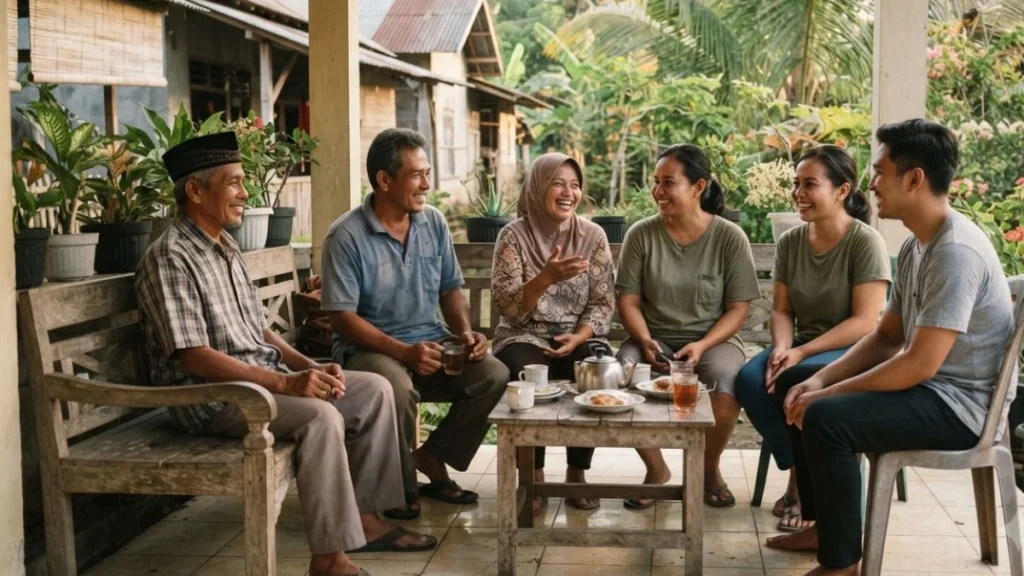
“Are you married yet?” “How much do you earn?” “Why don’t you have children?” For many foreigners, these questions land within minutes of meeting someone new in Indonesia — and they can feel invasive. But personal questions indonesian culture is less about nosiness and more about a completely different idea of what counts as polite conversation. For the bigger picture, see our Ultimate Guide to Understanding Indonesia.
In Indonesian culture, questions about marital status, family, income, religion, or weight are commonly used as icebreakers and expressions of friendly interest, not intrusions into privacy. This reflects a collectivist social framework where personal life is seen as naturally shared and communal, rather than private information to be guarded. Asking these questions is often a sign of care and social engagement, similar to how Western small talk might revolve around the weather or weekend plans.
Why It Matters
Understanding this helps prevent unnecessary offense on both sides. A foreigner who reacts defensively to a personal question may come across as cold or standoffish, while the person asking is usually just trying to build rapport. Recognizing the intent behind the question — connection, not judgment — makes these interactions much easier to navigate.
Cultural Context
This habit connects closely to the collectivist values discussed in our guide on gotong royong meaning — where individual life is understood as part of a shared community fabric. Personal details like marriage, children, and even salary are often seen as communal topics because they relate to family status and social standing, which are considered relevant to the wider group, not just the individual.
Common personal questions include:
- Sudah menikah? (Are you married yet?)
- Anaknya berapa? (How many children do you have?)
- Kerja di mana? Gajinya berapa? (Where do you work? How much do you earn?)
- Kok masih sendiri? (Why are you still single?)
Historical Background
The communal nature of Indonesian village life historically meant that most aspects of daily existence — work, marriage, family events, even finances — were visible and known within a tight-knit community. Privacy, as an individual right to withhold personal information, is a relatively recent and still-evolving concept in many parts of Indonesian society, shaped more by urbanization and Western influence than by traditional social structures.
Regional Differences
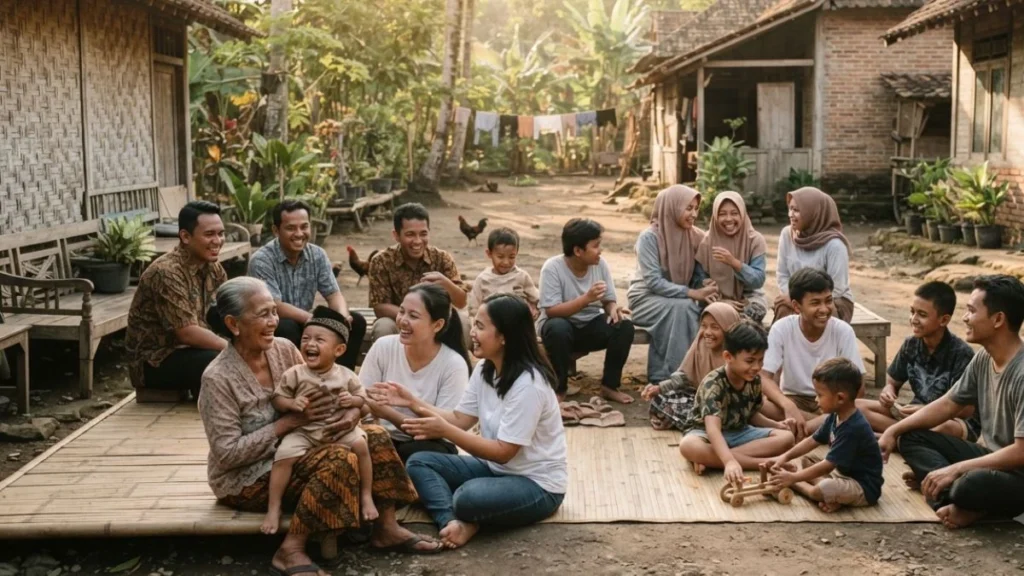
- In rural areas and smaller towns, personal questions tend to be more frequent and more direct, since community members are more involved in each other’s daily lives.
- In major cities like Jakarta, especially among younger, more cosmopolitan Indonesians, there’s a growing awareness of Western-style privacy norms, and personal questions are asked more selectively.
- In some religious or conservative communities, questions about marriage and children can carry additional social weight, tied to expectations around family life stages.
Practical Guide
Here’s how to handle personal questions gracefully:
- Assume good intent. Most personal questions come from genuine curiosity and friendliness, not judgment.
- Answer loosely if you’re uncomfortable. A vague or humorous answer (“Belum rezeki” — “not my fortune yet,” for marriage questions) is a culturally accepted way to deflect without causing offense.
- Redirect with a question back. Turning the question around (“How about you?”) keeps the conversation friendly and balanced.
- Don’t take offense outwardly. Visible irritation can come across as unfriendly; a light, easygoing response is usually better received.
Common Misunderstandings
“They’re being rude on purpose.” These questions are almost never meant to embarrass — they’re a normal part of Indonesian small talk and relationship-building.
“Everyone in Indonesia is comfortable sharing personal details.” Comfort levels vary by individual and generation; younger, urban Indonesians may be just as private as anyone else.
“I have to answer honestly and in detail.” A polite, general, or even humorous answer is completely acceptable — you’re not obligated to disclose specifics.
Personal questions in Indonesian culture are less about curiosity for its own sake and more about a communal worldview where personal life is naturally part of shared conversation. Once reframed this way, these exchanges often feel a lot less like an interrogation and a lot more like an invitation to connect.
For related reading, see Collectivism vs Individualism in Indonesian Life and Indonesian Indirect Communication, or browse the full Culture pillar.
FAQ
Why do Indonesians ask about marriage so often?
Marriage and family status are seen as important life milestones tied to social standing, so they’re common, low-stakes conversation topics rather than sensitive subjects.
Is it okay to avoid answering personal questions in Indonesia?
Yes — a vague, general, or lightly humorous response is a normal and accepted way to sidestep questions you’d rather not answer in detail.
Do all Indonesians ask personal questions?
No — it varies by region, generation, and individual. Urban, younger Indonesians tend to be more selective, closer to Western norms around privacy.
Should I ask personal questions back?
Yes, it’s often welcomed and seen as a natural, friendly part of the conversation.
Is asking about income considered rude in Indonesia?
It’s less taboo than in many Western cultures, though attitudes are shifting, especially in professional and urban settings.