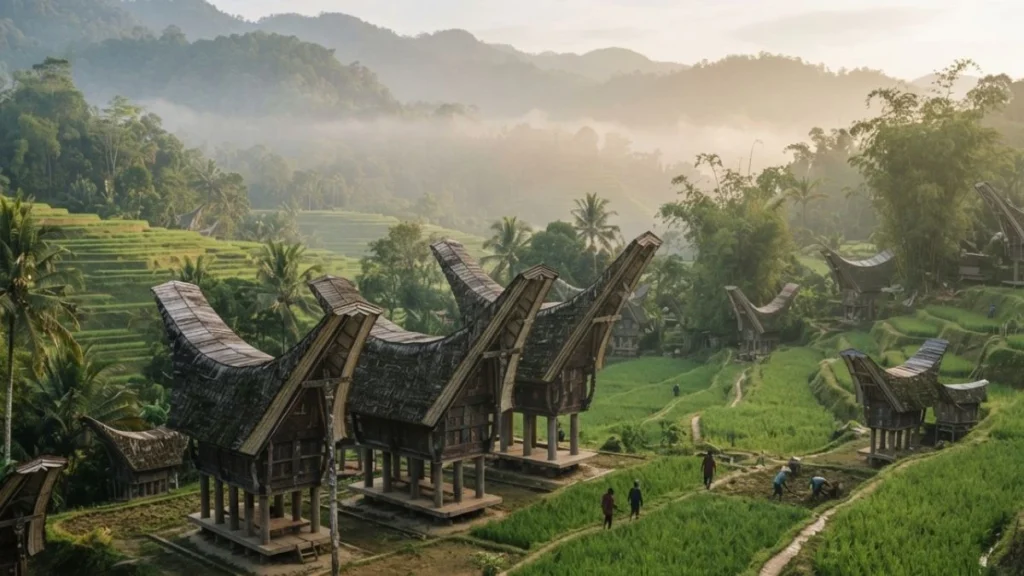
In the misty highlands of South Sulawesi, a death in the family doesn’t end with a quick burial — it can take months, even years, of saving, planning, and waiting before the deceased is finally laid to rest. Understanding the toraja funeral tradition known as Rambu Solo reveals one of the world’s most elaborate approaches to death, where mourning transforms into a genuine celebration of life and status. For the wider context, see our Ultimate Guide to Understanding Indonesia.
The Toraja funeral tradition, known locally as Rambu Solo’, is an elaborate death ceremony practiced by the Toraja people of the Tana Toraja highlands in South Sulawesi. Central to the ritual is the belief that death isn’t a sudden end but a gradual spiritual transition. The Toraja consider the deceased not truly dead but “sick” or “sleeping” until the family performs the full funeral ceremony, sometimes months or even years after biological death. The ceremony’s centerpiece is the sacrifice of water buffalo, believed to carry the deceased’s soul to Puya, the Torajan afterlife. The number of buffalo sacrificed directly reflects the social status of the deceased and their family.
Why It Matters
Understanding Rambu Solo offers genuine insight into how radically different cultures can approach death, grief, and social status — treating a funeral not as a somber, brief formality but as a monumental, community-wide celebration lasting days and requiring years of preparation. For visitors, recognizing the depth of meaning behind the ceremony transforms what might otherwise look like a strange spectacle into a profound, sincere expression of love, respect, and spiritual belief.
Cultural Context
Rambu Solo is rooted in Aluk To Dolo (“Way of the Ancestors”), an indigenous Torajan belief system holding that the universe is divided into an upper world, the human world, and the underworld, with funeral rites serving as the essential bridge guiding the soul safely between them. Several distinctive elements define the ceremony:
- The waiting period — the deceased remains in the family home, treated as though still living, with food and drink offered daily, while the family gathers resources and extended relatives for the eventual ceremony.
- Buffalo sacrifice — considered the ceremony’s spiritual and social centerpiece, with the number of buffalo (sometimes dozens, occasionally over a hundred for prominent figures) directly correlating to the deceased’s status; rare albino buffalo, called tedong bonga, are especially prized and can cost the equivalent of tens of thousands of US dollars.
- Ma’badong dance and traditional music — performed throughout the ceremony as prayers and offerings meant to comfort the spirit and guide its journey.
- Meat distribution — sacrificed animal meat is carefully distributed among guests, and donations of pigs or buffalo from attendees are meticulously recorded to be repaid when a member of the giving family later dies themselves.
- Tau-tau effigies — carved wooden figures representing the deceased, traditionally placed near burial sites as a form of remembrance.
Following Rambu Solo, some Toraja communities also practice Ma’Nene, a ceremony held periodically in which the mummified remains of ancestors are exhumed, cleaned, redressed, and paraded through the village — a further expression of ongoing connection between the living and the dead.
Historical Background
Rambu Solo and the broader Aluk To Dolo belief system developed over centuries within the geographically isolated highlands of Tana Toraja, with isolation itself credited by researchers as a key factor in preserving these ancient animist traditions largely intact. Beginning in the early 1900s, the majority of the Toraja population converted to Christianity following Dutch missionary contact — yet remarkably, rather than abandoning their ancestral funeral customs, most Torajans have maintained Rambu Solo and related death rituals alongside their Christian faith, blending the two rather than replacing one with the other. Decades later, as the Toraja opened more fully to outside visitors, Rambu Solo evolved to also welcome international tourists, who are generally seen as adding prestige to the ceremony rather than being viewed as intrusive.
Regional Differences
- Tana Toraja and North Toraja regencies, both in the highlands of South Sulawesi, remain the cultural heartland where Rambu Solo and related traditions are most actively and elaborately practiced.
- More remote highland villages tend to preserve the fullest, most traditional versions of the ceremony, including cliffside burial sites, hanging coffins, and tree graves for infants.
- Areas with greater tourism exposure have adapted somewhat to accommodate visitors, with local tourism boards helping coordinate respectful attendance at ceremonies during peak funeral season, typically between July and September.
- Urban Toraja communities and diaspora members, who may live and work elsewhere in Indonesia, often still return to their highland home villages to participate in family Rambu Solo ceremonies, reflecting the tradition’s continued binding importance across generations and distance.
Practical Guide
If you’re interested in respectfully learning about or attending a Toraja funeral ceremony:
- Plan a visit between July and September. This period sees the highest concentration of Rambu Solo ceremonies, as families often plan funerals around the dry season and when more relatives can travel.
- Connect with the local tourism board or a knowledgeable guide beforehand. They can help identify appropriate ceremonies open to visitors and provide essential cultural context and etiquette guidance.
- Approach the ceremony with genuine respect, not just curiosity. While visitors are welcomed and even seen as adding prestige, Rambu Solo is a sacred, deeply meaningful event for the family involved, not a staged performance.
- Expect to see buffalo sacrifice as part of the ceremony. This is a central, spiritually significant element of the tradition — visitors sensitive to this aspect should consider this in advance.
- Explore Tongkonan houses and cliffside burial sites nearby. These distinctive traditional structures and burial locations offer meaningful additional context to the funeral tradition itself.
Common Misunderstandings
“The Toraja delay funerals out of financial disorganization.” Delays reflect the belief that the deceased remains in a transitional “sleeping” state until proper ceremonial preparation is complete, alongside the genuine need to gather significant resources and extended family for a fitting ceremony.
“Rambu Solo is incompatible with the Toraja’s Christian faith.” Despite widespread conversion to Christianity beginning in the early 1900s, most Torajans have maintained Rambu Solo and Aluk To Dolo-rooted funeral customs alongside their Christian beliefs, rather than abandoning one for the other.
“Buffalo sacrifice is simply about wealth display.” While the number of buffalo does reflect social status, the sacrifice is understood as a genuine spiritual necessity — believed to literally carry the deceased’s soul safely to Puya, the Torajan afterlife.
The Toraja funeral tradition stands as one of the most elaborate and spiritually rich death ceremonies anywhere in the world — a profound blending of animist belief, community celebration, and enduring respect for ancestors that has survived colonization, religious conversion, and modernization largely intact. Understanding Rambu Solo offers a genuinely different way of seeing death, not as an ending to be mourned quickly, but as a significant spiritual passage worth honoring fully.
For related reading, see Bali Is Not Indonesia: Understanding the Difference and Local Spirits and Sacred Places: Animism in Indonesia Today, or browse the full Regional Cultures pillar.
FAQ
What is Rambu Solo?
Rambu Solo is the traditional Toraja funeral ceremony from South Sulawesi, involving buffalo sacrifice, community gatherings, and rituals believed to guide the deceased’s soul to the afterlife, known as Puya.
Why do the Toraja delay funerals for months or years?
The deceased is considered “sleeping” rather than fully dead until the funeral ceremony is performed, and families need significant time to gather resources, livestock, and extended relatives for a proper ceremony.
Why are buffalo sacrificed during Toraja funerals?
Buffalo are believed to carry the deceased’s soul to Puya, the afterlife, with the number sacrificed reflecting the social status of the deceased and their family.
Are Toraja funeral ceremonies open to tourists?
Yes — Torajans generally welcome respectful visitors, often viewing international attendance as adding prestige to the ceremony, though contacting local guides or the tourism board beforehand is recommended.
When is the best time to witness a Toraja funeral ceremony?
Rambu Solo ceremonies are most commonly held between July and September, coinciding with the dry season and when extended family can more easily travel to attend.