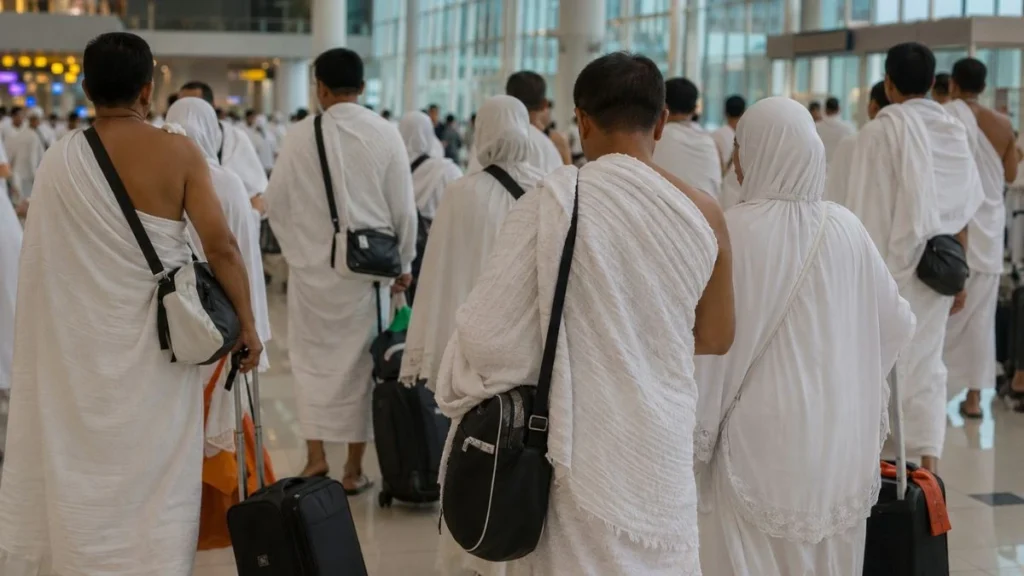
In some Indonesian provinces, a Muslim who registers for Hajj in their twenties won’t actually make the pilgrimage until their fifties or sixties. Not because of visa problems or personal delay — but because the waiting list itself stretches that long. Hajj Indonesia waiting list length reveals something remarkable: a nation so devoted to this pilgrimage that even the world’s largest annual quota can’t keep up with demand. For the wider context, see our Ultimate Guide to Understanding Indonesia.
Hajj is the annual Islamic pilgrimage to Mecca, one of the Five Pillars of Islam, required at least once in a lifetime for Muslims who are physically and financially able. Indonesia, home to the world’s largest Muslim population at around 240 million people, consistently receives the largest national Hajj quota allocated by Saudi Arabia — 221,000 pilgrims for both 2025 and 2026, following a record-breaking 241,000 in 2024. Despite that massive allocation, more than 5.5 million Indonesians remain on waiting lists that stretch anywhere from roughly 15 to over 40 years, depending on the province, making Hajj registration something many Indonesian Muslims begin planning for decades before they can actually go.
Why It Matters
Indonesia’s Hajj scale reveals just how central this pilgrimage is to Indonesian Muslim identity — not a once-in-a-while aspiration, but a lifelong goal that shapes financial planning, family conversation, and community status for millions of people. Understanding the waiting-list system also explains why departing pilgrims are celebrated so visibly in Indonesian communities, and why the government has built one of the world’s most elaborate logistical operations specifically to manage the journey.
Cultural Context
Several elements define how Hajj functions in Indonesian Muslim life:
- Saudi Arabia’s quota system — pilgrimage slots are allocated by country roughly in proportion to each nation’s Muslim population, at approximately 1,000 pilgrims per million Muslims, which is why Indonesia, as the country with the largest Muslim population, consistently receives the largest allocation worldwide.
- A genuinely long wait — with over 5.5 million people on Indonesia’s waiting lists, some provinces report wait times stretching 26 to 40 years, meaning many Indonesians register for Hajj well before they’re financially or physically ready to travel.
- Umrah as an alternative — because Hajj waits are so long, many Indonesian Muslims perform Umrah, a shorter, non-mandatory pilgrimage to Mecca that can be completed at any time of year, as a way to visit the holy sites sooner.
- Community send-off ceremonies — departing pilgrims are frequently celebrated with communal gatherings, prayers, and well-wishes from neighbors and extended family before leaving, reflecting the pilgrimage’s status as a significant life milestone, not a private trip.
- The honorific title “Haji” or “Hajjah” — Indonesian Muslims who have completed Hajj are often addressed with this respectful title for the rest of their lives, a social marker of having fulfilled this pillar of faith.
Historical Background
Indonesian participation in Hajj dates back centuries, tied closely to the broader spread of Islam through trade networks across the archipelago beginning around the 13th century. Historically, the journey by sea took weeks or months and carried genuine physical risk, meaning far fewer Indonesians could realistically undertake it compared to today’s air travel era. As commercial aviation made the journey dramatically faster and more accessible through the 20th century, demand grew far beyond what Saudi Arabia’s quota system could immediately accommodate, especially as Indonesia’s Muslim population continued to expand.
Indonesia’s modern Hajj quota has fluctuated with both diplomatic negotiation and global events: the country received 231,000 slots in 2019, before COVID-19 sharply reduced the 2022 quota to just 100,051 pilgrims. Numbers rebounded to 229,000 in 2023 and reached a historic peak of 241,000 in 2024, following an agreement between Indonesia’s Religious Affairs Ministry and Saudi Arabia’s Hajj and Umrah Ministry that added a special supplementary quota of 20,000 slots. The Indonesian government has invested heavily in Hajj-specific infrastructure over recent decades, including dedicated airport terminals and permanent support offices in Saudi Arabia, reflecting the sheer administrative scale required to manage hundreds of thousands of pilgrims each year.
Regional Differences
- East Java, Central Java, and West Java consistently send the highest numbers of pilgrims nationally, reflecting these provinces’ large Muslim populations.
- Provinces with especially long waiting lists exist across the country, with some regions reporting wait times of 26 to 40 years, driven by high local demand relative to each province’s specific quota allocation.
- South Kalimantan has seen notable enforcement issues, including reported cases of prospective pilgrims being prevented from departing due to registration or documentation problems.
- Urban and rural Muslim communities alike treat Hajj departure as a significant communal event, though specific customs around send-off ceremonies can vary by region and local tradition.
Practical Guide
If you want to understand Indonesia’s Hajj system as an outsider:
- Recognize that quota size doesn’t mean short wait times. Despite holding the world’s largest Hajj allocation, Indonesia’s waiting lists remain among the longest globally due to sheer population scale and demand.
- Understand Umrah as a distinct, more accessible pilgrimage. Unlike Hajj, Umrah isn’t mandatory and can be performed any time of year without the same quota restrictions, making it a common substitute while Indonesians wait for their Hajj turn.
- Recognize the social weight of the “Haji” title. Addressing someone who has completed Hajj by this honorific is a standard sign of respect in Indonesian Muslim communities.
- Expect Hajj season to affect travel and logistics. With hundreds of thousands of pilgrims departing from and returning to Indonesia annually, expect airport congestion and dedicated flight scheduling during Hajj season, typically falling in the Islamic month of Dhul Hijjah.
Common Misunderstandings
“A large Hajj quota means Indonesians don’t have to wait long.” Indonesia’s quota is the largest in the world, but with over 5.5 million people on waiting lists, actual wait times still stretch anywhere from roughly 15 to over 40 years depending on the province.
“Hajj and Umrah are the same pilgrimage.” Hajj is a mandatory pilgrimage performed during a specific period each year and forms one of Islam’s Five Pillars, while Umrah is a shorter, optional pilgrimage that can be completed at any time and doesn’t fulfill the same religious obligation.
“Indonesia’s Hajj quota has stayed constant over the years.” The quota has fluctuated significantly — including a sharp COVID-19-era drop to just over 100,000 in 2022, followed by a recovery to a record 241,000 in 2024 and roughly 221,000 in 2025 and 2026.
Indonesia’s scale of Hajj participation says as much about the country’s religious devotion as any single statistic could — millions waiting years, sometimes decades, for a journey they’ve planned toward for most of their adult lives. Understanding this system offers real insight into how deeply Islamic practice and communal identity intersect in everyday Indonesian life.
For related reading, see How Ramadan Shapes Daily Life in Indonesia and Religious Diversity in Indonesia Explained, or browse the full Beliefs & Spirituality pillar.
FAQ
Why does Indonesia have such a long Hajj waiting list?
Indonesia has the world’s largest Muslim population, and although it also receives the largest Hajj quota globally, demand still far exceeds available slots, pushing wait times to anywhere from roughly 15 to over 40 years depending on the province.
How many pilgrims does Indonesia send to Hajj each year?
Indonesia’s Hajj quota was 221,000 for both 2025 and 2026, following a record 241,000 in 2024, making it consistently the largest national contingent in the world.
What is the difference between Hajj and Umrah?
Hajj is a mandatory pilgrimage performed during a specific period each year and is one of Islam’s Five Pillars, while Umrah is a shorter, optional pilgrimage that can be performed at any time and doesn’t fulfill the same religious requirement.
How are Hajj quotas determined by country?
Saudi Arabia allocates quotas roughly in proportion to each country’s Muslim population, at approximately 1,000 pilgrims per million Muslims, which is why Indonesia consistently receives the largest allocation worldwide.
What does the title “Haji” mean in Indonesia?
“Haji” (or “Hajjah” for women) is an honorific title given to Indonesian Muslims who have completed the Hajj pilgrimage, commonly used as a sign of respect for the rest of their lives.