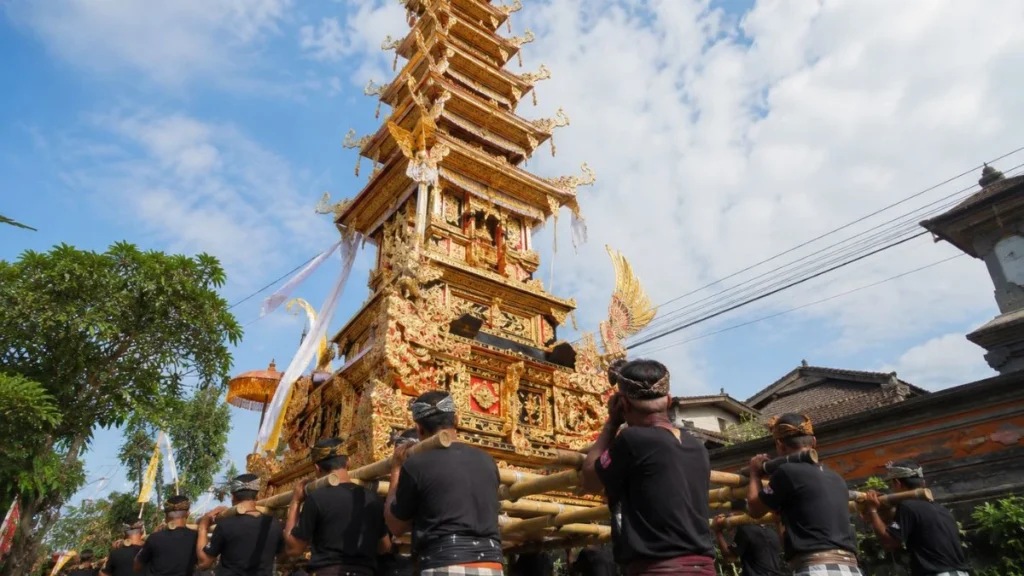
At most funerals, tears mark the moment of loss. At a Balinese Ngaben, families sometimes don’t cry at all — because from their perspective, the person hasn’t really left, only moved on to whatever comes next. Ngaben Balinese cremation ceremony rituals reframe death itself, treating it as a joyful, necessary transition rather than a final, sorrowful ending. For the wider context, see our Ultimate Guide to Understanding Indonesia.
Ngaben, also known as Pitra Yadnya or Pelebon, is the traditional Balinese Hindu cremation ritual, performed to release the soul (atma) from the physical body so it can continue its journey toward reincarnation or, in some cases, achieve moksha — full liberation from the cycle of rebirth. The word “ngaben” itself is generally understood to mean “turning into ash.” Rather than a mournful event, Ngaben is treated as a celebration: Balinese Hindu belief holds that the body is only a temporary vessel made of earth, air, fire, water, and space, while the soul is eternal and must be properly released through fire before it can move forward.
Why It Matters
Understanding Ngaben reveals just how differently Balinese Hindu spirituality approaches death compared to many other cultures — as a necessary, even celebratory, spiritual transition rather than a tragedy to be mourned quietly. Recognizing this helps visitors interpret what might otherwise look like a strange contradiction: elaborate, colorful, sometimes genuinely festive public processions built directly around the death of a loved one. It also offers real insight into how deeply reincarnation and karma shape everyday Balinese life, extending well beyond formal religious observance.
Cultural Context
Several elements define how Ngaben actually unfolds:
- Bade — a tall, elaborately decorated multi-tiered tower used to carry the deceased in procession, with its height and ornamentation often reflecting the person’s caste and social status.
- Sarcophagus structures — the body is placed inside a coffin, then within a sarcophagus commonly shaped like a bull (lembu) or an ornate temple-like structure (wadah), carried to the cremation site.
- Nyekah — a follow-up purification ritual addressing Panca Karmendria, the five categories of sin tied to conduct, food, actions, sexual behavior, and speech, helping determine the soul’s next steps through what’s called karma wasana.
- Ash scattering at sea — after cremation, families gather the ashes and bone fragments, often placing them in a coconut shell before scattering them in the ocean or a river, symbolizing the soul’s return to nature.
- Delayed timing — Ngaben doesn’t happen immediately after death; families often wait weeks, months, or even years, driven by the genuine cost of a proper ceremony and the need to consult a priest for an auspicious date on the ritual calendar. In the meantime, the deceased may be temporarily buried until arrangements are complete.
- Mass cremation events — to ease financial burden, some Balinese communities now organize shared Ngaben ceremonies for multiple families at once, spreading costs across the group while preserving the ritual’s core meaning.
Historical Background
Ngaben is rooted in Balinese Hinduism’s broader theological framework, which holds that human existence cycles through samsara (reincarnation) until the soul achieves sufficient purity to reunite with the divine, referred to as Ida Sang Hyang Widhi. Balinese Hindu belief holds that a competition exists between benevolent and malevolent spiritual forces for control of a newly departed soul, and that a properly performed cremation significantly improves the soul’s chance of reaching the upper spiritual realm rather than becoming trapped by lower, negative influences. This theological structure traces back to Bali’s centuries-old Hindu-Javanese heritage, carried over and locally adapted long after much of the rest of the Indonesian archipelago shifted toward Islam.
Historically, the grandest Ngaben ceremonies were associated with royal families, involving massive towers, elaborate gold detailing, and preparations spanning months or years — practices still echoed today in the most elaborate modern ceremonies, even though contemporary Ngaben spans a wide range of scales, from lavish multi-village events to simpler, community-supported cremations. The core theological purpose, however, has remained consistent: freeing the soul from its physical and worldly ties so it can continue its spiritual journey, whether toward reincarnation or ultimate liberation.
Regional Differences
- Ubud and Central Bali are especially well known for hosting some of the most elaborate, large-scale Ngaben ceremonies, often drawing significant community participation and visitor interest.
- Royal or noble Balinese families have historically staged the grandest versions of the ceremony, with towering, gold-detailed bade structures reflecting elevated caste and social status.
- Rural village communities more commonly practice simpler, cost-shared Ngaben, sometimes coordinating mass ceremonies to reduce the financial burden on individual families while preserving the ritual’s essential structure.
- Coastal areas play a specific ceremonial role regardless of a family’s social standing, since ash-scattering at the sea remains a consistent final step across most Ngaben traditions.
Practical Guide
If you want to respectfully witness or learn about a Ngaben ceremony:
- Ask locals, particularly in areas like Ubud, about upcoming ceremonies. Balinese communities are often welcoming toward genuinely respectful visitors interested in observing.
- Approach it as a celebration, not a somber event. Understanding the ceremony’s joyful, liberating purpose helps visitors engage appropriately, rather than treating it with the hushed solemnity typical of Western funerals.
- Dress modestly and follow local guidance on conduct. As with temple visits, appropriate dress and respectful behavior are expected even though the atmosphere may feel festive.
- Recognize that timing is unpredictable. Since Ngaben depends on financial readiness and an auspicious date from the ritual calendar, ceremonies don’t follow a fixed public schedule — patience and local connections matter more than advance planning.
Common Misunderstandings
“Ngaben is a sad, mournful funeral like those found elsewhere.” Balinese families generally treat Ngaben as a celebration of the soul’s liberation rather than an occasion for grief, reflecting core Hindu beliefs about reincarnation and the temporary nature of the physical body.
“Cremation always happens immediately after death in Bali.” Ngaben is frequently delayed by weeks, months, or even years, as families gather resources and wait for an auspicious date, sometimes temporarily burying the body in the meantime.
“All Ngaben ceremonies are equally massive and expensive.” While royal and elite versions can be extraordinarily elaborate, many Balinese communities now hold simpler, shared mass cremation ceremonies that reduce individual cost while preserving the ritual’s spiritual core.
Ngaben offers one of the clearest windows into Balinese Hindu spirituality — a ceremony that reframes death not as a tragic ending, but as a necessary, even joyful, step in the soul’s ongoing journey. Understanding its structure and meaning transforms what might look like a strange or dramatic public spectacle into one of the most spiritually significant rituals in Balinese life.
For related reading, see Nyepi: Bali’s Day of Silence Explained and Toraja Funeral Tradition Explained, or browse the full Beliefs & Spirituality pillar.
FAQ
What does “Ngaben” mean?
Ngaben is generally understood to mean “turning into ash,” referring to the Balinese Hindu cremation ceremony designed to release the soul from the physical body.
Why isn’t Ngaben treated as a sad occasion?
Balinese Hindu belief holds that death marks a transition toward reincarnation or spiritual liberation (moksha), not a final tragic ending, so the ceremony is treated as a celebration of the soul’s release rather than a mournful event.
Why is Ngaben sometimes delayed for months or years?
Families often need time to gather sufficient financial resources for a proper ceremony and must wait for an auspicious date determined through consultation with a priest and the Balinese ritual calendar.
What happens to the ashes after a Ngaben ceremony?
Families typically gather the ashes and bone fragments, often placing them in a coconut shell, before scattering them in the sea or a nearby river to symbolize the soul’s return to nature.
Can tourists watch a Ngaben ceremony in Bali?
Yes — respectful visitors are often welcome to observe, particularly in areas like Ubud, though it’s best to ask locals about upcoming ceremonies and to follow appropriate etiquette around dress and conduct.