No other fruit gets thrown off airplanes. In 2018, an Indonesian domestic flight was delayed after passengers demanded a shipment of durian be removed from the cargo hold entirely — the smell alone was enough to stop a plane from taking off. Durian Indonesia history runs far deeper than its reputation as a divisive snack; it’s carved into a thousand-year-old temple relief and remains a genuine symbol of abundance across the archipelago. For the wider context, see our Ultimate Guide to Understanding Indonesia.
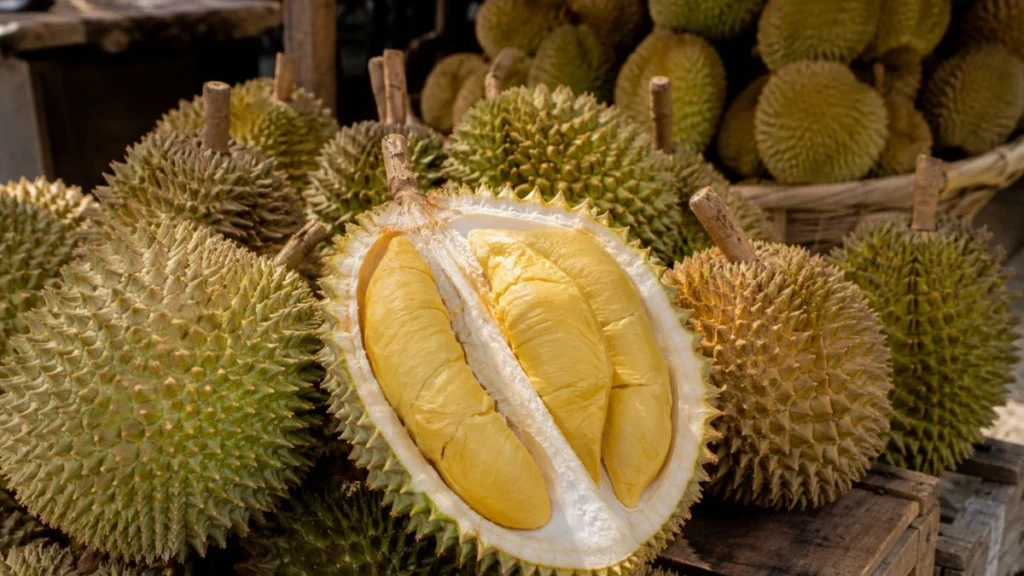
Durian is a large, spiky tropical fruit native to the rainforests of Borneo and Sumatra, encased in a thorny husk that gives it its name — “durian” derives from the Malay word duri, meaning thorn. Beneath that intimidating shell sits rich, custard-like flesh with a flavor profile so complex that descriptions range from “heavenly” to “utterly repulsive,” often in the same breath. Its smell is equally polarizing, commonly compared to a mix of sulfur, rotten onions, turpentine, and raw sewage — a combination potent enough to get durian banned from hotels, public transit, and airline cargo across much of Southeast Asia. Despite, or perhaps because of, this reputation, durian is widely known across the region as the “King of Fruits.”
Why It Matters
Durian offers a genuinely rare case study in how a single food can carry deep cultural and ecological weight while remaining polarizing on a purely sensory level. Understanding its Indonesian roots reveals something the fruit’s controversial reputation often overshadows: durian trees have functioned as multi-generational family assets, medicine sources, and ecological anchors for the animals and pollinators that depend on them. Recognizing this helps visitors move past the smell and appreciate why durian holds such genuine cultural weight across Indonesia and its neighbors.
Cultural Context
Durian’s role in Indonesian and broader Southeast Asian culture extends well beyond taste:
- A symbol of abundance and prosperity — durian is closely associated with fertility, plenty, and community wellbeing in various indigenous Southeast Asian traditions, appearing in ceremonies and celebrations rather than just casual snacking.
- A multi-generational family asset — in home courtyards across the region, durian trees are cherished for providing food, medicine, and shelter across generations of the same family, rather than being planted and consumed within a single lifetime.
- An ecological keystone species — elephants, orangutans, bats, and other pollinators rely on durian trees, meaning the fruit’s cultivation and conservation directly affects broader rainforest biodiversity, not just human food supply.
- Genuine public controversy — durian’s smell has led to real, enforced bans in hotels and public transportation across Southeast Asia, and cargo-related disputes, including a widely reported 2018 incident where an Indonesian flight was delayed until a durian shipment was removed.
- A seasonal, festival-driven food — durian typically ripens between June and August, and its short harvest window fuels regional durian festivals and buffets that draw both locals and visitors.
Historical Background
Durian has grown wild in the rainforests of Borneo and Sumatra for centuries, long before written records or European contact, with Indonesia, Malaysia, and Brunei all sharing a claim to its ancestral range. The earliest known written references to durian appear in Malay texts from around the 15th century, describing it as already popular among local royalty at the time. The first recorded Western encounter came through Niccolò de’ Conti, an Italian merchant who traveled through Southeast Asia in the 15th century and documented the fruit for European audiences for the first time.
Durian’s cultural significance in the Indonesian archipelago runs deeper than casual food history: relief panels carved into Borobudur, the 9th-century Buddhist temple in Central Java, depict durian specifically as a symbol of abundance — physical evidence that the fruit held cultural meaning in Java over a thousand years ago. From those origins in Borneo and Sumatra, durian cultivation gradually spread across Southeast Asia, reaching Thailand, Vietnam, the Philippines, and Singapore, each developing its own regional cultivars, festivals, and cultural associations with the fruit over subsequent centuries.
Regional Differences
- Sumatra and Kalimantan (Indonesian Borneo) remain closely tied to durian’s wild ancestral origins, hosting some of the greatest natural diversity of durian species found anywhere.
- Medan, North Sumatra has built a particularly strong reputation for high-quality durian, drawing both domestic and international visitors during peak season.
- Malaysia treats durian as an unofficial national symbol, home to the prized Musang King variety and its own dedicated durian festivals and culture.
- Thailand stands as the world’s largest durian exporter, with a well-known regional saying — “don’t judge a durian by its smell” — reflecting the fruit’s divisive reputation even within cultures that revere it.
- Indonesian Kalimantan specifically faces a genuine modern threat: expanding oil palm plantations are reducing the space available for diverse durian species to grow, endangering both the fruit’s genetic diversity and the wildlife that depends on it.
Practical Guide
If you want to try durian in Indonesia:
- Visit during peak season, roughly June to August. This is when durian is freshest, most widely available, and often celebrated through local festivals.
- Try Medan if you want a reputation-backed destination. North Sumatra’s capital is specifically known for high-quality durian among Indonesian durian enthusiasts.
- Pair it with sticky rice, as local tradition suggests. This is a common way to balance durian’s intense flavor profile for first-time tasters.
- Check local rules before bringing durian indoors. Many hotels and forms of public transportation in Indonesia and neighboring countries explicitly ban durian due to its smell — checking ahead avoids an awkward situation.
Common Misunderstandings
“Durian is just a modern food trend.” Durian has grown wild in Borneo and Sumatra for centuries, with written references dating to at least the 15th century and physical evidence of cultural significance carved into Borobudur’s 9th-century reliefs.
“Durian’s smell is only a minor inconvenience.” The odor is potent enough to warrant official bans in hotels, public transportation, and even airline cargo holds across parts of Southeast Asia — it’s a genuine, actively enforced restriction, not just a passing comment.
“Durian cultivation has no real environmental stakes.” Durian trees function as an ecological keystone species, supporting elephants, orangutans, bats, and pollinators — meaning threats like oil palm expansion in Kalimantan carry real consequences for regional biodiversity, not just fruit supply.
Durian’s story in Indonesia runs from ancient rainforest origins to temple carvings to modern-day airline disputes — a fruit whose controversial reputation often overshadows its deep cultural, economic, and ecological roots. Understanding that fuller picture reveals why so many Indonesians, and their Southeast Asian neighbors, genuinely consider durian worthy of its royal title.
For related reading, see Indonesian Food Guide: Rendang, Nasi Goreng, and Satay Explained and Tempeh Origin: Indonesia’s 16th-Century Superfood, or browse the full Food Culture pillar.
FAQ
Why is durian called the “King of Fruits”?
Durian earns this title through its imposing size, spiky exterior, intense flavor, and deep cultural significance across Southeast Asia, despite — or perhaps because of — its notoriously strong smell.
Where does durian originally come from?
Durian is native to the rainforests of Borneo and Sumatra, with Indonesia, Malaysia, and Brunei all sharing a claim to its ancestral wild habitat.
Why is durian banned in some hotels and public spaces?
Its distinctive, potent smell — often compared to sulfur, rotten onions, and raw sewage — is strong and long-lasting enough that many hotels and transportation systems across Southeast Asia enforce explicit bans.
When is durian season in Indonesia?
Durian typically ripens between June and August, making this the peak season for freshness, availability, and regional durian festivals.
Is durian cultivation under any environmental threat?
Yes — in Indonesian Kalimantan specifically, expanding oil palm plantations are reducing space for diverse durian species, threatening both the fruit’s genetic diversity and the wildlife that depends on it.