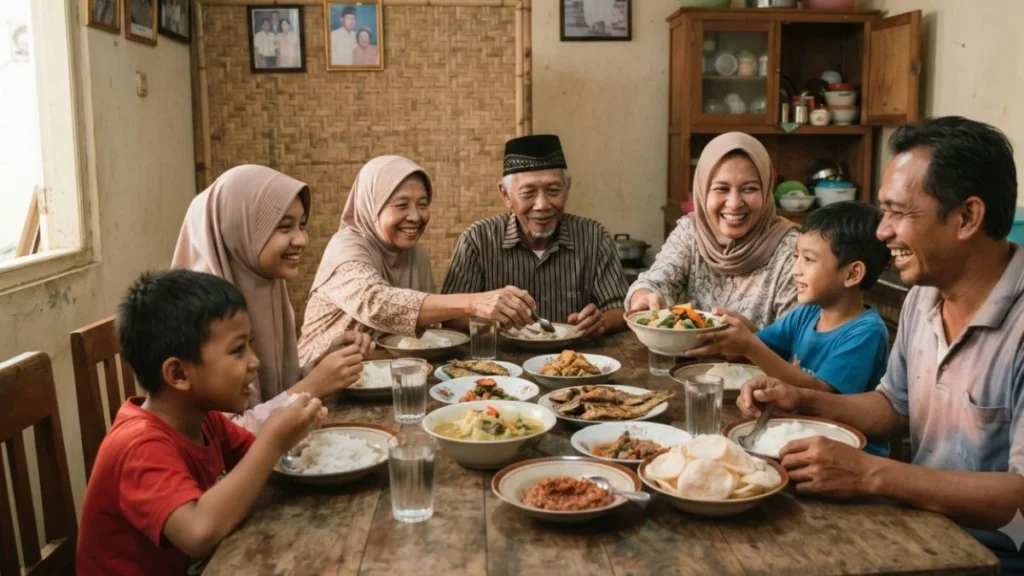
In many Western societies, personal achievement, independence, and individual choice sit at the center of daily life. In Indonesia, the starting point is different: the group — family, neighborhood, community — often comes first. This is the foundation of indonesian collectivist culture, and it shapes everything from decision-making to how success itself is measured. For the wider picture, see our Ultimate Guide to Understanding Indonesia.
Indonesian collectivist culture refers to a social framework in which group harmony, family obligation, and community wellbeing are generally prioritized over individual preference or personal ambition. Decisions — from career choices to marriage to daily social behavior — are often made with consideration for how they affect the family or community, not just the individual. This contrasts with individualist cultures, where personal autonomy and self-expression are typically the primary values guiding behavior.
Why It Matters
Understanding this distinction is essential for interpreting behavior that might otherwise seem confusing to outsiders — why major life decisions often involve extended family input, why group consensus can take priority over individual opinion in meetings, and why practices like gotong royong and communal obligation are so deeply embedded in daily life.
For anyone working with Indonesian colleagues, partners, or communities, recognizing collectivist values helps explain motivations that a purely individualist lens would miss.
Cultural Context
Collectivism in Indonesia shows up across multiple layers of life:
- Family decision-making — Choices about education, career, and marriage often involve parents and extended family, not just the individual.
- Workplace dynamics — Group harmony and consensus-building are frequently prioritized over individual assertiveness or open disagreement.
- Social obligation — Attending community events, contributing to shared causes, and maintaining relationships are treated as responsibilities, not optional extras.
- Identity — A person’s sense of self is often closely tied to their family and community role, rather than defined primarily through individual achievement.
This collectivist orientation is also closely connected to the indirect communication style explored in our guide on indonesian indirect communication — since preserving group harmony often means avoiding direct confrontation.
Historical Background
Indonesia’s collectivist orientation has roots in traditional village-based social structures (desa and adat systems), where survival and daily life depended on cooperative labor, shared land use, and mutual support networks. These structures predate colonial and national governance and remain culturally influential even in modern, urbanized settings. The formal incorporation of gotong royong into Indonesia’s founding philosophy under Sukarno further reinforced collectivism as a defining national trait, not just a rural custom.
Regional Differences
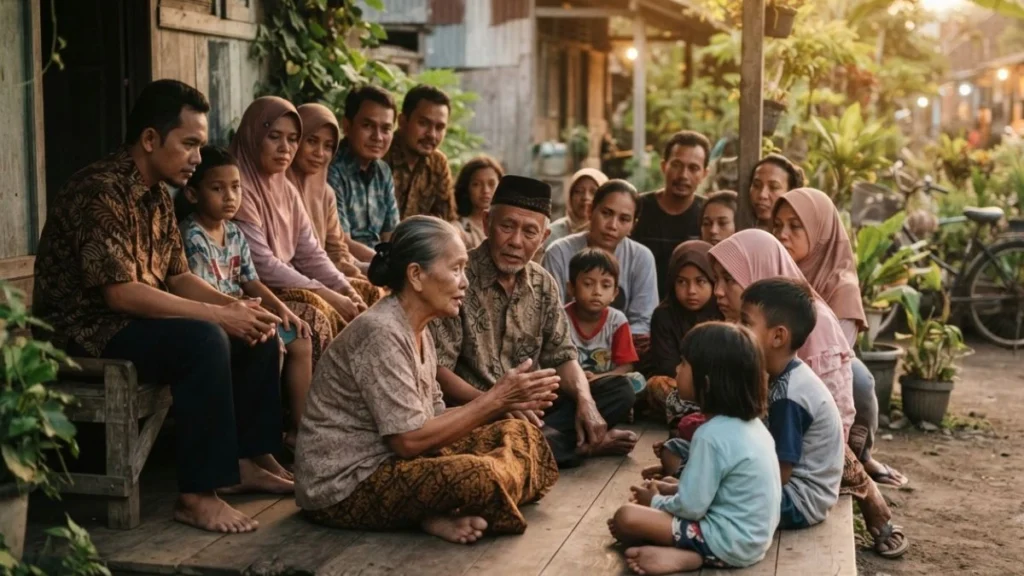
- Javanese culture tends to emphasize group harmony and hierarchical respect strongly, with collectivist values expressed through subtlety and indirectness.
- Minangkabau society (West Sumatra) blends collectivism with a distinct matrilineal family and inheritance structure, where clan identity plays a central role.
- Urban Indonesia, particularly among younger, educated populations, shows a gradual shift toward more individualist values — especially in career choices and personal lifestyle — while family obligation often remains strong underneath.
Practical Guide
If you’re navigating Indonesian collectivist culture, keep these points in mind:
- Expect group input on major decisions. Family or community opinion often plays a real role, even in decisions that would be purely individual elsewhere.
- Prioritize consensus in group settings. In meetings or community discussions, pushing hard for an individual position can be less effective than working toward shared agreement.
- Recognize obligation as connection, not restriction. Community responsibilities are often experienced as belonging, not burden — approaching them with that mindset builds better relationships.
- Balance directness carefully. Individual opinions are welcome, but framing them with awareness of group harmony tends to land better than blunt independence.
Common Misunderstandings
“Collectivist means no individuality exists.” Indonesians absolutely have individual personalities, opinions, and ambitions — collectivism shapes how those are expressed and balanced against group considerations, not whether they exist.
“Younger Indonesians have fully abandoned collectivist values.” Even urban, globally-connected younger Indonesians often maintain strong family obligations alongside more individualist career or lifestyle choices — it’s a blend, not a replacement.
“Collectivism only applies to family. It extends to neighborhoods, workplaces, religious communities, and even national identity — family is one layer among several.
Indonesian collectivist culture offers a fundamentally different lens for understanding decision-making, identity, and daily social life — one where the group and the individual are seen as deeply interconnected rather than separate. Recognizing this framework makes it much easier to understand the logic behind everyday behavior that might otherwise seem puzzling.
For related reading, see What Is Gotong Royong? and Why Indonesians Ask So Many Personal Questions, or browse the full Culture pillar.
FAQ
Is Indonesia a collectivist or individualist country?
Indonesia is broadly considered a collectivist culture, with strong emphasis on family, community, and group harmony, though individualist values are growing in urban areas.
Does collectivist culture affect business in Indonesia?
Yes — consensus-building, relationship-based decision-making, and group harmony often play a larger role in Indonesian business culture than individual assertiveness.
Are younger Indonesians becoming more individualist?
There’s a gradual shift, especially in career and lifestyle choices, but family obligation and community involvement generally remain strong.
How does collectivism affect family decisions?
Major life choices like marriage, education, and career often involve input from parents and extended family, not just the individual.
Is collectivism the same across all of Indonesia?
No — it varies by region and ethnic group, though the underlying value of group harmony is broadly shared nationwide.