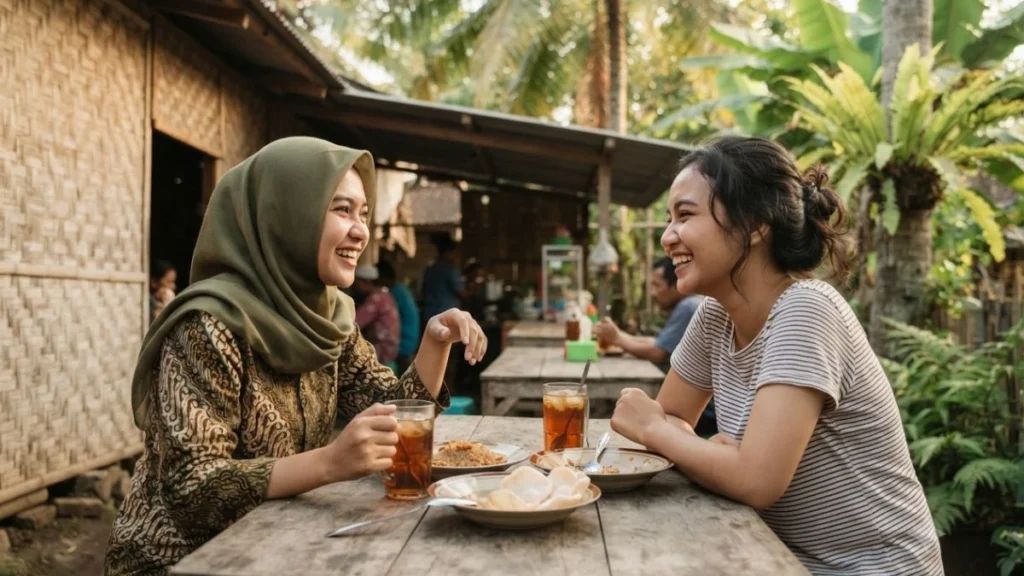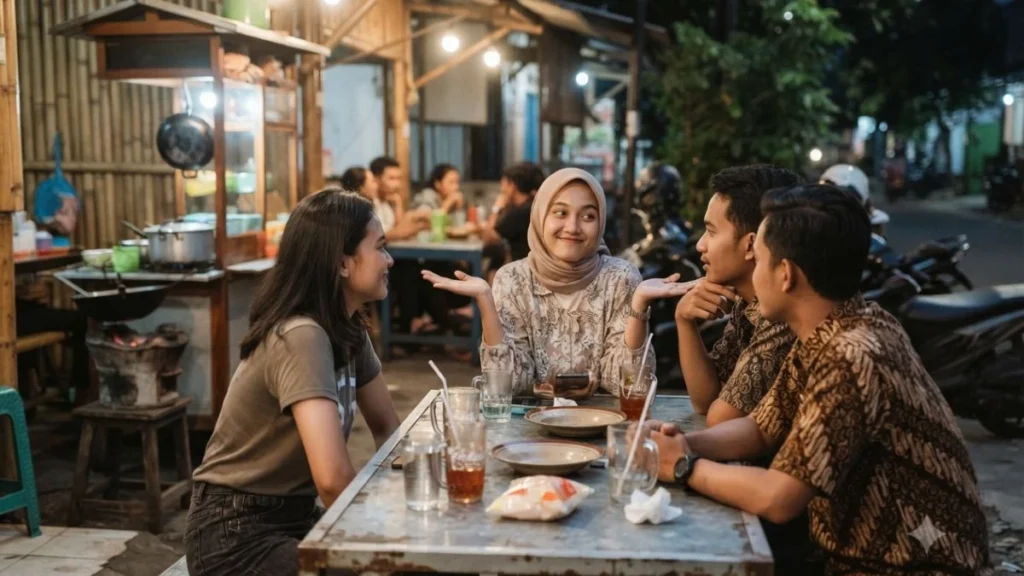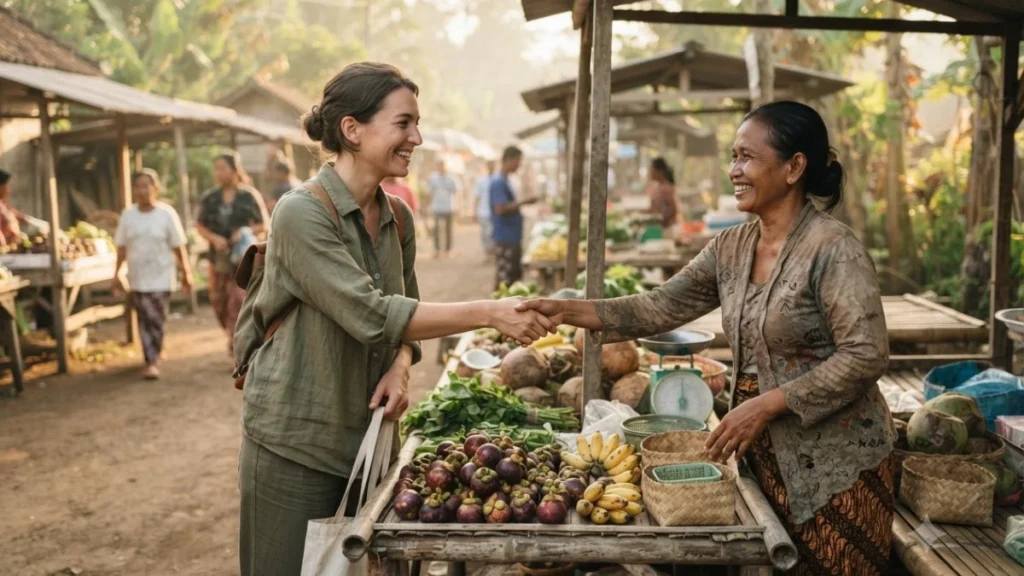
A well-timed “Selamat pagi” to a warung owner or a genuine “Terima kasih” after a favor can shift an entire interaction in Indonesia. You don’t need fluency to travel well — a handful of basic indonesian phrases, used at the right moment, go a remarkably long way toward warmer, easier encounters with locals. For the wider context, see our Ultimate Guide to Understanding Indonesia.
Basic Indonesian phrases for travelers center on a small, high-value set of words: time-based greetings (selamat pagi, siang, sore, malam), the universal casual greeting halo, essential courtesy words (terima kasih for thank you, permisi for excuse me, maaf for sorry), and a few practical survival phrases for asking directions or prices. Unlike English, where “good afternoon” covers a broad stretch of the day, Indonesian greetings are split into more specific time windows, so getting the timing right is part of using them correctly.
Why It Matters
Indonesians generally respond warmly to visitors who make even a small effort to speak the local language, and greetings are the easiest, lowest-risk way to do this. Beyond politeness, correctly timed greetings and basic courtesy phrases smooth over everyday interactions — asking for directions, negotiating at a market, or simply exchanging pleasantries with a host — in ways that pure English often can’t in more rural or traditional settings.
Cultural Context
Indonesian greetings follow a distinct time-based structure:
- Selamat pagi — “Good morning,” used from early morning until around 11 AM.
- Selamat siang — “Good day,” used roughly from 11 AM to 3 PM, covering the hottest part of the day.
- Selamat sore — “Good afternoon,” used from around 3 PM until sunset.
- Selamat malam — “Good evening/night,” used after dark.
The word selamat itself carries a meaning close to “safe,” “well,” or “blessed,” and is also used in phrases like selamat datang (“welcome”) and selamat jalan (“safe travels” / farewell to someone leaving). For casual, informal situations — especially with people your own age — simply saying halo or dropping selamat and using just pagi, siang, sore, or malam on its own is common and perfectly natural.
Beyond greetings, a few phrases carry outsized social value:
- Terima kasih — “Thank you,” useful in virtually every interaction.
- Permisi — “Excuse me,” used to politely get someone’s attention or move past them.
- Maaf — “Sorry” or “excuse me,” used for minor apologies or interruptions.
- Apa kabar? — “How are you?” (literally “what’s the news?”), typically answered with baik (“good”) or baik-baik saja (“just fine”).
Historical Background
Modern Indonesian (Bahasa Indonesia) developed from Malay, which was standardized and adopted as Indonesia’s national language following independence in 1945, specifically chosen because it was already a widely understood trade and interethnic language across the archipelago rather than tied to any single dominant ethnic group. Many everyday greetings, including the selamat-based structure, come directly from this Malay linguistic heritage, and remain consistent in form across the country as part of standardized Bahasa Indonesia, even though Indonesia is home to hundreds of distinct regional languages.
Regional Differences
Standard Indonesian greetings apply nationwide and are understood everywhere, since Bahasa Indonesia functions as the shared national language. That said, regional and religious variation adds texture:
- In many Muslim-majority areas, especially in Sumatra and other more devout regions, greetings often begin with the Islamic phrase “Assalamu’alaikum” (“Peace be upon you”), especially in more formal or respectful contexts.
- In Bali, greetings in the local Balinese language exist alongside standard Indonesian, though Bahasa Indonesia remains universally understood by locals and is perfectly appropriate for visitors to use.
- Casual regional slang for greetings can vary — for instance, some areas favor shortened, informal versions of standard greetings in daily speech among friends.
Practical Guide
Here’s how to use basic Indonesian phrases effectively as a traveler:
- Match the greeting to the time of day. Using selamat pagi well past noon can sound slightly off — pay attention to the roughly four-part daily split (pagi/siang/sore/malam).
- Default to halo if unsure. It’s a safe, universally understood casual greeting that works at any time of day.
- Pair greetings with a smile and light nod. Non-verbal warmth reinforces the greeting and is a normal part of polite Indonesian interaction.
- Learn a few practical phrases beyond greetings. “Di mana…?” (“Where is…?”) and “Berapa harganya?” (“How much does this cost?”) are especially useful for navigating and shopping.
Common Misunderstandings
“Selamat siang and selamat sore are interchangeable.” They cover distinct time windows — siang is roughly late morning to mid-afternoon, while sore covers late afternoon into evening — using the wrong one can sound like a small but noticeable mistake.
“You need fluent Indonesian for greetings to matter.” Even a handful of correctly used basic phrases are genuinely appreciated and make a real difference in how warmly visitors are received.
“English greetings work fine everywhere in Indonesia.” While English is common in major tourist areas, basic Indonesian greetings are far more effective in local markets, smaller towns, and everyday interactions with people who may not speak English fluently.
A small set of well-timed Indonesian greetings and courtesy phrases can transform how travelers are received — turning transactional interactions into warmer, more genuine exchanges. Getting a few basic phrases right is a simple, low-effort way to show respect and openness to Indonesian culture.
For related reading, see Terserah Meaning: Indonesia’s Most Loaded “Whatever” and Indonesian Indirect Communication, or browse the full Language & Expressions pillar.
FAQ
What are the four main Indonesian greetings based on time of day?
Selamat pagi (morning, until ~11 AM), selamat siang (midday, ~11 AM–3 PM), selamat sore (afternoon, ~3 PM–sunset), and selamat malam (evening/night, after dark).
Is “halo” appropriate to use anytime in Indonesian?
Yes — “halo” is a casual, universally understood greeting that works at any time of day, especially in informal settings.
How do you say “thank you” in Indonesian?
“Terima kasih” is the standard way to say thank you in Indonesian, appropriate in virtually any setting.
What does “Apa kabar?” mean?
It literally translates to “What’s the news?” but functions like “How are you?” — typically answered with “baik” (good) or “baik-baik saja” (just fine).
Do Indonesian greetings vary by religion or region?
Standard Indonesian greetings are used nationwide, though Islamic greetings like “Assalamu’alaikum” are also common, especially in more religious or formal contexts.