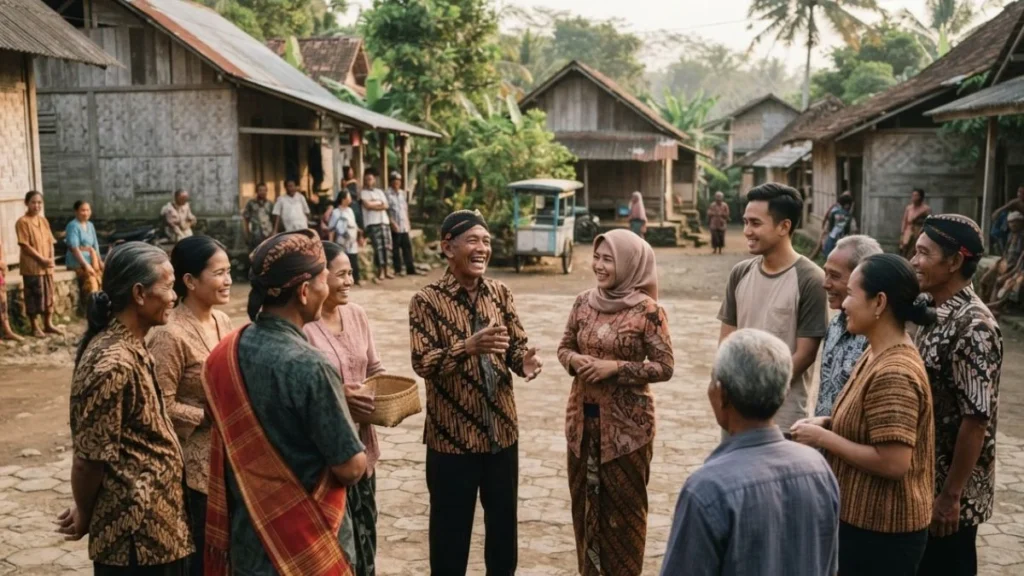
Bahasa Indonesia is the language you’ll hear on the news, in schools, and in most conversations with strangers — but for the vast majority of Indonesians, it isn’t the first language they ever learned. Understanding indonesian local languages reveals a linguistic landscape far richer, and far more fragile, than the single national language suggests. For the wider context, see our Ultimate Guide to Understanding Indonesia.
Indonesia is home to roughly 700 to 720 local languages, according to sources including Ethnologue and Indonesia’s Language Development and Fostering Agency (Badan Bahasa). That makes it the second most linguistically diverse country in the world, behind only Papua New Guinea. These local languages exist alongside Bahasa Indonesia, the standardized national language used in government, education, and media. Bahasa Indonesia functions as a shared bridge language across the archipelago’s hundreds of distinct ethnic and linguistic communities.
Why It Matters
Indonesia’s scale of linguistic diversity is easy to underestimate from the outside, since nearly everyone speaks Bahasa Indonesia and it’s the language visitors will hear and use most. Understanding that most Indonesians actually grow up with a different mother tongue first helps explain regional identity, local pride, and why Bahasa Indonesia — despite being universal — often isn’t “the language of the heart” for many Indonesians in their home and community life.
Cultural Context
Most Indonesians are genuinely multilingual by necessity, typically speaking a local or regional language at home, Bahasa Indonesia at school and work, and sometimes English or another language depending on their background and region. The largest local languages by number of speakers include:
- Javanese — spoken by more than 80 million people, primarily in Central and East Java, making it one of the most widely spoken languages in the world that isn’t a national language anywhere.
- Sundanese — spoken by around 40 million people in West Java.
- Madurese, Minangkabau, and Balinese — each with millions of speakers and strong regional identities.
At the other end of the scale, some of Indonesia’s languages are spoken by only a few hundred people, particularly in linguistically dense regions like Maluku and Papua, where villages just a few kilometers apart can speak entirely unrelated languages. Most of Indonesia’s languages belong to the Austronesian language family, though a significant number of non-Austronesian (Papuan) languages are spoken in eastern Indonesia, reflecting a genuinely separate linguistic heritage from the rest of the archipelago.
Historical Background
Indonesia’s linguistic diversity reflects thousands of years of migration, trade, and settlement across more than 17,000 islands, with distinct language communities developing largely in isolation from one another for long stretches of history. When Indonesia gained independence in 1945, Malay — rather than the more widely spoken Javanese — was adopted and standardized as Bahasa Indonesia, the national language, precisely because it was already a shared trade language across the region and wasn’t tied to any single dominant ethnic group, making it a more politically neutral choice for uniting a vastly multilingual new nation.
Regional Differences
Linguistic density varies enormously by region:
- Java and Bali are home to a relatively small number of local languages, but each has an extremely large number of speakers (Javanese and Sundanese together account for well over 100 million speakers).
- Eastern Indonesia, particularly Papua and Maluku, contains a disproportionately large share of the country’s total language count, often with very small speaker populations concentrated in single villages or small clusters of villages.
- Sumatra, Kalimantan, and Sulawesi each host dozens of distinct regional languages tied to specific ethnic groups, including Minangkabau, Batak, Dayak, and Toraja languages, among many others.
Practical Guide
If you’re interested in Indonesia’s local languages as a traveler or learner:
- Bahasa Indonesia is enough for travel nationwide. As the standardized national language, it’s understood virtually everywhere, so learning local languages isn’t necessary for basic travel.
- Learning a few local words is a strong gesture of respect. In regions with a strong local language identity (Java, Bali, West Sumatra), even a few words in the local language can be warmly received.
- Expect linguistic diversity to be more visible in rural and eastern regions. If traveling through Papua, Maluku, or remote parts of Sulawesi, don’t assume a single local language applies broadly across the area.
- Recognize Bahasa Indonesia’s role as a unifier, not a replacement. Speaking Indonesian doesn’t mean a community has lost its local language — the two typically coexist, a pattern linguists call diglossia.
Common Misunderstandings
“Indonesian and Bahasa Indonesia are two different things.” They refer to the same national language — Bahasa Indonesia is simply the formal Indonesian-language name for the Indonesian language.
“Everyone in Indonesia speaks the same first language.” Bahasa Indonesia is a shared, learned second language for most Indonesians — a majority grow up speaking a regional or local language first, especially outside major urban areas.
“All of Indonesia’s local languages are equally at risk.” Risk varies enormously — widely spoken languages like Javanese remain strong and institutionally supported, while many smaller languages, especially in Papua, have only a small number of aging speakers and face genuine extinction risk within a generation.
Indonesia’s roughly 700-plus local languages represent one of the richest linguistic landscapes on Earth — a living record of the country’s migration history, geographic isolation, and cultural diversity. Recognizing this diversity, and the pressures many of these languages now face, adds real depth to understanding what “Indonesian” identity actually contains beneath the shared national language.
For related reading, see Javanese vs Bahasa Indonesia: What’s the Difference? and Regional Cultures of Indonesia, or browse the full Language & Expressions pillar.
FAQ
How many languages does Indonesia have?
Estimates from sources like Ethnologue place the number at roughly 700 to 720 local languages, making Indonesia the second most linguistically diverse country in the world after Papua New Guinea.
Is Bahasa Indonesia the same as Indonesian?
Yes — Bahasa Indonesia is simply the formal name for the Indonesian language, the country’s standardized national language.
What is the most widely spoken local language in Indonesia?
Javanese, with more than 80 million speakers, is by far the largest local language, followed by Sundanese with around 40 million speakers.
Are Indonesia’s local languages at risk of disappearing?
Yes — a significant number, particularly smaller languages in Papua and Maluku, are classified as endangered or critically endangered, with some spoken by only a handful of elderly speakers.
Why was Malay chosen as Indonesia’s national language instead of Javanese?
Malay was selected because it was already a widely understood trade and interethnic language across the archipelago, making it a politically neutral choice not tied to any single dominant ethnic group.