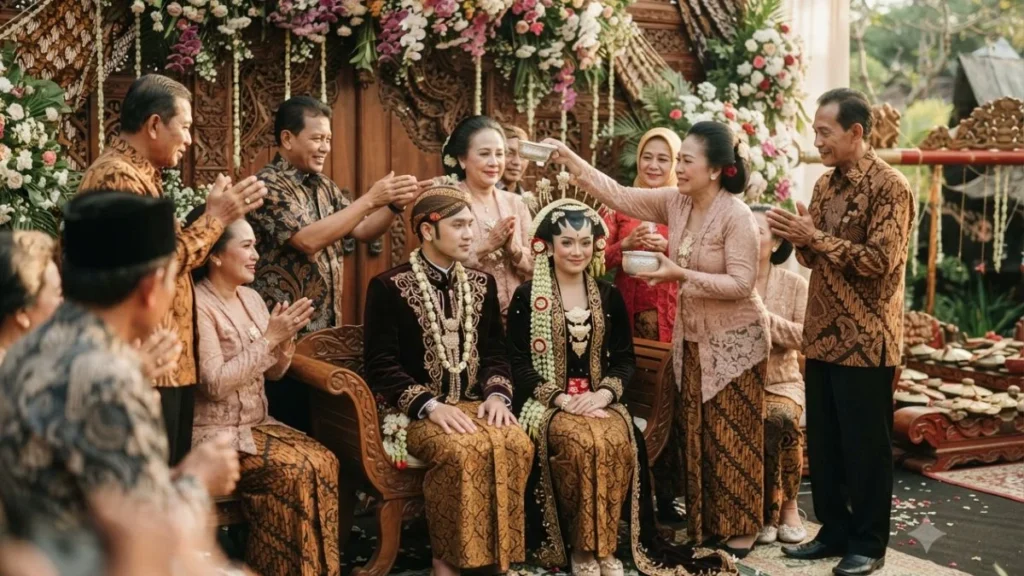
A Javanese wedding can unfold over days of quiet, symbolic ritual. A Minangkabau wedding involves a proposal that formally comes from the bride’s family. A Batak wedding features formal dowry negotiations and clan speeches. Across Indonesia’s hundreds of ethnic groups, indonesian wedding traditions vary dramatically from island to island — yet nearly all of them share one thing in common: marriage is treated as a union of families and communities, not just two individuals. For the wider context, see our Ultimate Guide to Understanding Indonesia.
Indonesia’s ethnic groups each practice their own adat (customary) wedding ceremonies, with distinct pre-wedding rituals, attire, symbolic gestures, and family roles. Javanese, Sundanese, Balinese, Batak, and Minangkabau weddings all look and feel different from one another. Yet most share a common thread: family involvement, ancestral respect, and community participation, echoing Indonesia’s broader collectivist cultural values.
Why It Matters
Understanding regional wedding customs helps make sense of just how central family and community are in Indonesian social life — a wedding is rarely just about the couple, but about uniting two families and often an entire neighborhood or village in shared celebration. For anyone attending an Indonesian wedding, recognizing the specific regional customs at play also helps avoid confusion and shows genuine respect for the hosts’ heritage.
Cultural Context
Several regional traditions stand out for their distinct customs:
- Javanese and Sundanese weddings are among the most structured, often including siraman (a ritual bathing symbolizing purification), midodareni (a quiet eve-of-wedding vigil and blessing night), and sungkeman (a ceremony where the couple kneels before parents to ask for blessings and forgiveness). These traditions blend older Hindu-Buddhist court customs with later Islamic practices.
- Balinese weddings center on spiritual ceremony, typically held at the family temple, with banten (elaborate offerings of flowers and fruit) and purification rituals such as mekala-kalaan performed to seek blessings from deities and ancestors.
- Batak weddings (North Sumatra) involve formal dowry negotiation known as sinamot, along with the Mandok Hata ceremony, where family members deliver formal speeches, and the gifting of traditional ulos cloth as a symbol of blessing.
- Minangkabau weddings (West Sumatra) reflect the region’s matrilineal heritage — unusually, the initial approach can come from the bride’s family, and ceremonies often include Malam Bainai (a henna night before the wedding) and stages like Manjapuik Marapulai, where the bride’s family formally goes to collect the groom.
Historical Background
Indonesian wedding traditions have developed through layered cultural influence over centuries — pre-existing indigenous adat customs blended over time with Hindu-Buddhist court traditions (especially visible in Javanese and Balinese practices), later shaped further by the arrival of Islam and, in some coastal trading regions, Indian and Arab cultural influence. Rather than replacing older customs, each new influence tended to layer onto existing adat structures, which is why many contemporary Indonesian weddings still combine religious ceremony (often Islamic, Hindu, or Christian) with distinctly regional adat rituals rooted in much older tradition.
Regional Differences
Beyond the major traditions already described, regional distinctions extend to attire, cuisine, and ceremonial dress:
- Javanese brides typically wear kebaya with batik, paired with the elaborate paes forehead painting, while grooms wear a beskap jacket with a blangkon headpiece.
- Sundanese brides often wear the ornate siger crown.
- Minangkabau brides are known for the towering gold suntiang headdress, paired with richly woven songket fabric.
- Balinese weddings favor bold gold-and-red ceremonial dress, with grooms often wearing a traditional keris (ceremonial dagger) as a symbol of strength and protection.
- Regional wedding feasts also reflect local cuisine — Javanese celebrations often feature tumpeng (cone-shaped rice) and gudeg, while Minangkabau feasts commonly include rendang and other richly spiced dishes.
Practical Guide
If you’re attending an Indonesian wedding, especially one following adat traditions:
- Ask about the specific ethnic tradition being followed. Customs, dress codes, and ceremony length vary significantly, so a quick question to the host avoids assumptions based on only one regional style.
- Expect multi-day celebrations for some traditions. Batak and Minangkabau weddings, in particular, can extend over several days of connected ceremonies rather than a single event.
- Dress respectfully and modestly unless specifically invited to wear traditional attire, and follow the host’s guidance on appropriate colors or styles.
- Recognize that community participation is genuine, not symbolic. Neighbors and extended family often actively help prepare food, decorations, and logistics — attending isn’t just witnessing a ceremony, it’s joining a larger communal effort.
Common Misunderstandings
“All Indonesian weddings follow the same customs.” With hundreds of ethnic groups across the archipelago, wedding traditions vary enormously by region — there is no single “Indonesian wedding” format.
“Adat ceremonies have been replaced by religious weddings.” In most cases, adat traditions are performed alongside religious ceremonies (Islamic, Christian, Hindu, etc.), not instead of them — couples typically honor both.
“Minangkabau weddings work just like other regions, only with different decorations.” Minangkabau wedding customs reflect a genuinely distinct matrilineal social structure, which meaningfully shapes who initiates proposals and how family roles are structured — it’s a different underlying system, not just different aesthetics.
Indonesian wedding traditions offer one of the clearest windows into the country’s cultural diversity — each region’s customs carry centuries of layered history, spiritual meaning, and family values. Recognizing these differences reveals just how much a wedding in Indonesia is a celebration of community and heritage, not only of the couple at its center.
For related reading, see Indonesian Collectivist Culture and Why West Sumatra Follows Its Mothers (Matrilineal Minangkabau), or browse the full Traditions & Festivals pillar.
FAQ
Do all Indonesian weddings include the same rituals?
No — rituals vary significantly by ethnic group and region, though most share an emphasis on family involvement and ancestral respect.
What is siraman in a Javanese wedding?
Siraman is a pre-wedding ritual bathing ceremony that symbolizes spiritual and physical purification before marriage.
Why is the bride’s family involved in proposing in Minangkabau weddings?
Minangkabau society is matrilineal, meaning lineage and certain family roles pass through the female line, which shapes distinct customs like the bride’s family taking a more active role in the proposal process.
How long do Indonesian weddings typically last?
It varies widely — some traditions are completed in a single day, while others, like Batak and Minangkabau weddings, can extend across several days of connected ceremonies.
Can foreigners take part in or host a traditional Indonesian wedding?
Yes — many venues, particularly in Bali, offer traditional wedding packages that incorporate authentic regional customs for couples wanting to honor Indonesian heritage.