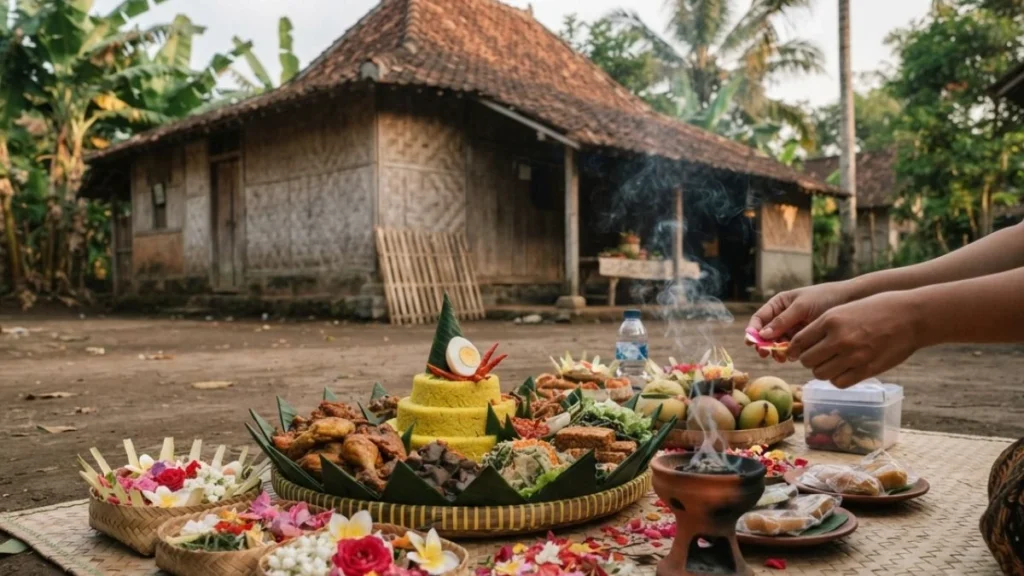
Long before Java’s mosques, churches, and temples took their current form, an older spiritual current was already running beneath the island’s surface — one focused less on public ritual and more on inward reflection. Understanding kejawen javanese mysticism means looking past any single religion’s label and into a genuinely syncretic worldview that has shaped Javanese life for centuries. For the wider context, see our Ultimate Guide to Understanding Indonesia.
Kejawen is a collection of spiritual customs, beliefs, and philosophical teachings rooted in ancient Javanese society, often translated by Western scholars as “Javanese mysticism.” Many mystical traditions stay reserved for religious specialists. Kejawen doesn’t: its emphasis on inward spiritual experience, rather than outward ritual observance, runs through the everyday worldview of many Javanese people, not just a select few. Its mystical branch is specifically known as Kebatinan, focused on inner contemplation, unity with the divine, and connection to the cosmos — comparable in spirit to other esoteric traditions like Sufism or Kabbalah.
Why It Matters
Kejawen offers essential context for understanding why religious practice in Java often looks different from more orthodox observance elsewhere in Indonesia — blending Islamic belief with older animist, Hindu, and Buddhist elements rather than replacing them outright. Recognizing Kejawen also helps explain broader patterns in Javanese culture, including its historical emphasis on social harmony, symbolic ritual, and flexible spiritual identity that has shaped everything from local customs to national philosophy.
Cultural Context
Kejawen’s defining feature is syncretism — the blending of Hindu, Buddhist, Islamic, and indigenous animist elements into a single, coherent worldview, rather than treating them as separate or competing systems. This shows up in several distinctive practices:
- Slametan — a communal ritual meal held to mark life events, harvests, moving into a new home, or protective rituals for a child, aimed at fostering rukun (social harmony) by bringing the community together regardless of differing individual beliefs.
- Semedi — meditation practices used to cultivate inner stillness and connection with the divine.
- Abangan identity — a term for Javanese Muslims whose religious life centers more on syncretic customs like slametan than on strict observance of the five daily prayers, fasting, or pilgrimage, while still revering Allah and the Prophet Muhammad.
- Belief in the dukun — traditional specialists who serve as healers, ritual experts, or spiritual practitioners within the Kejawen worldview.
Crucially, Kejawen is not itself one of Indonesia’s six officially recognized religions — it exists as a broader cultural and philosophical current that Javanese people of different formal religious affiliations may still draw from in everyday life.
Historical Background
Kejawen developed out of ancient Javanese society well before the arrival of Islam, absorbing animist beliefs, then later Hindu-Buddhist philosophy during the era of Java’s classical kingdoms, and eventually Islamic mysticism following Islam’s spread across the island from around the 15th century onward. Rather than each new influence replacing the last, Kejawen absorbed them syncretically — a pattern historians trace partly to legendary figures like Syekh Siti Jenar, a Javanese-Kejawen sage associated with esoteric Islamic teaching that blended local philosophy with Sufi-influenced mysticism.
Following Indonesian independence in 1945, Kebatinan practitioners struggled to gain full state recognition, since Indonesia’s post-independence religious framework centered around six officially recognized world religions rather than syncretic local traditions. Despite this, Kejawen and Kebatinan have remained deeply woven into Javanese art, politics, and popular culture, and some scholars have argued that Kejawen’s inclusive, non-dogmatic spirit even influenced the philosophical tone of Indonesia’s national motto, Bhinneka Tunggal Ika (“Unity in Diversity”).
Regional Differences
- Central Java, particularly around Yogyakarta and Surakarta (Solo), is widely considered the cultural heartland of Kejawen, closely tied to the historical royal courts and their traditions of mysticism and symbolic ritual.
- Rural and village Java tends to preserve more visible Kejawen customs, including slametan and ruwatan (protective rituals), compared to more urbanized, religiously orthodox communities.
- More devout Muslim communities (santri) in parts of Java tend to distance themselves from Kejawen practices, viewing them as insufficiently aligned with orthodox Islamic teaching, creating an ongoing internal tension between santri and abangan religious identities within Javanese society.
Practical Guide
If you’re interested in learning about or respectfully observing Kejawen traditions:
- Approach it as a cultural and philosophical tradition, not a religion to convert to. Kejawen exists alongside Indonesia’s six officially recognized religions rather than replacing them, and is best understood as a distinct spiritual lens.
- Look for slametan or similar communal rituals as an entry point. These communal meals are a visible, welcoming expression of Kejawen values around harmony and community.
- Be sensitive to internal religious tension. Some devout Muslim Javanese view Kejawen practices as inconsistent with orthodox Islam, so discussing it respectfully and without generalization matters.
- Seek out Javanese literature for deeper context. Classical texts like Serat Centhini are often cited as repositories of Kejawen philosophy and spiritual instruction.
Common Misunderstandings
“Kejawen is a religion like Islam or Christianity.” It’s more accurately described as a spiritual and philosophical tradition or cultural worldview, not one of Indonesia’s six officially recognized religions, and many practitioners hold Kejawen beliefs alongside a formal religious identity.
“Kejawen and Kebatinan are the same thing.” Kebatinan specifically refers to the mystical, esoteric branch of Kejawen focused on inner spiritual experience, while Kejawen more broadly describes the wider Javanese cultural and spiritual tradition it belongs to.
“Kejawen has disappeared in modern Java.” While facing real institutional and religious pressure, Kejawen continues to shape Javanese art, ritual, and everyday cultural practice, particularly in Central Java and rural communities.
Kejawen represents a genuinely distinctive spiritual current — one built on syncretism, inward reflection, and social harmony rather than rigid doctrine. Understanding it adds real depth to how Javanese identity, and by extension much of Indonesian cultural philosophy, has been shaped by centuries of blending rather than division.
For related reading, see Religious Diversity in Indonesia Explained and How Ramadan Shapes Daily Life in Indonesia, or browse the full Beliefs & Spirituality pillar.
FAQ
What does Kejawen mean?
Kejawen refers to a collection of spiritual customs and philosophical teachings rooted in ancient Javanese society, often called “Javanese mysticism” by Western scholars.
Is Kejawen an official religion in Indonesia?
No — Kejawen is not one of Indonesia’s six officially recognized religions, though it remains a significant cultural and spiritual tradition, especially in Central Java.
What is the difference between Kejawen and Kebatinan?
Kebatinan is the specific mystical, inward-focused branch of the broader Kejawen tradition, emphasizing meditation and unity with the divine.
What is a slametan?
A slametan is a communal ritual meal central to Kejawen practice, held to mark life events or community milestones and aimed at fostering social harmony (rukun).
Do practicing Muslims in Java follow Kejawen?
Some do — Javanese Muslims who blend Islamic belief with Kejawen customs are often referred to as abangan, distinct from more strictly observant santri Muslims.