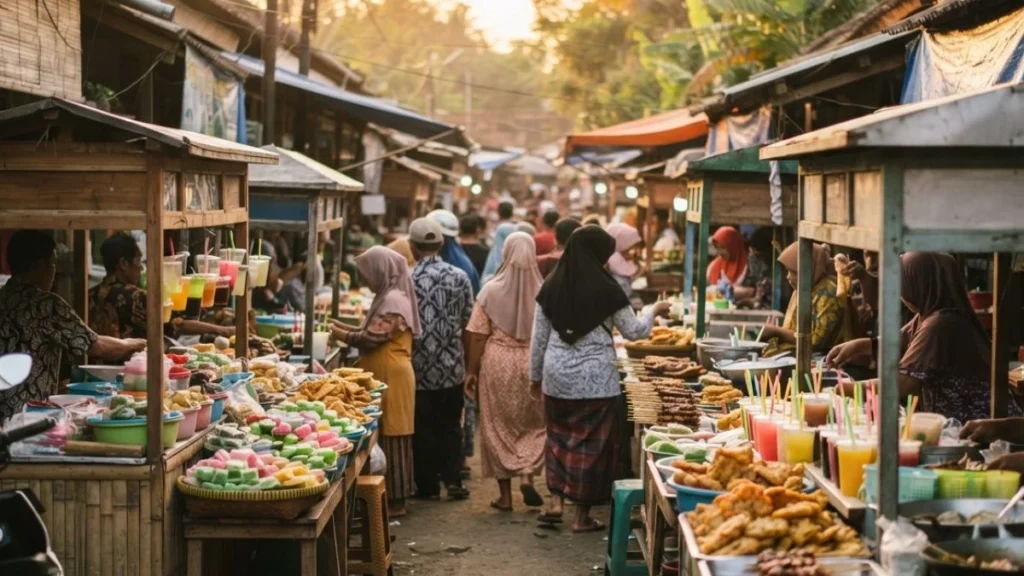
For thirty days each year, Indonesia’s rhythm changes entirely — offices open and close earlier, streets fill with food vendors only in the late afternoon, and neighborhoods wake before dawn to the sound of drums. Understanding how Ramadan in Indonesia changes daily life each year means recognizing just how much a single religious observance can reshape an entire country’s schedule, habits, and social calendar. For the wider context, see our Ultimate Guide to Understanding Indonesia.
Ramadan in Indonesia is the Islamic fasting month observed by the country’s Muslim majority. Daily life visibly shifts around fasting hours, prayer, and community traditions. Indonesia officially reduces working hours during Ramadan, typically shifting from a standard 8 AM to 5 PM schedule to around 8 AM to 3 PM, and the overall pace of both government and private-sector work slows down. Beyond the fast itself, Ramadan introduces a set of distinctly Indonesian daily rituals — from pre-dawn sahur meals to the late-afternoon tradition of ngabuburit — that shape how millions of Indonesians structure their entire day for a full month.
Why It Matters
Understanding how Ramadan reshapes daily life is essential for anyone living in, working with, or visiting Indonesia during this period — business hours shift, traffic patterns change, and social expectations around eating, drinking, and even scheduling meetings adjust significantly. For non-Muslims and visitors, recognizing these changes also opens the door to participating respectfully in some of Indonesia’s warmest communal traditions, many of which welcome outside guests.
Cultural Context
Ramadan in Indonesia unfolds through a distinct daily rhythm built around several key rituals:
- Sahur — the pre-dawn meal eaten before the fast begins, typically around 3 to 4 AM, often signaled by neighborhood mosque announcements or groups of young people walking through the streets beating drums and calling out “Sahur, sahur!” to wake residents.
- Ngabuburit — a Sundanese term meaning “waiting for maghrib (sunset),” referring to the late-afternoon activities Indonesians use to pass time before breaking the fast, commonly involving walks, visits to Ramadan markets (pasar Ramadan), or hunting for takjil.
- Takjil — light snacks and sweet treats sold widely by roadside vendors in the lead-up to sunset, creating a lively pre-iftar atmosphere in markets and neighborhoods nationwide.
- Buka puasa / bukber — breaking the fast at sunset, often done communally; bukber (short for buka bersama, “breaking fast together”) has become a major social tradition, with friends, coworkers, and extended family organizing group iftar gatherings throughout the month.
- Reduced work and shifted social hours — offices and schools typically close earlier, evenings shift toward family time and bukber invitations rather than typical after-work activities, and the overall pace of getting things done, both at home and at work, generally slows.
Historical Background
Ramadan has been observed in Indonesia since Islam’s gradual spread across the archipelago beginning around the 13th century, blending over centuries with existing local, often Hindu-Buddhist and animist, cultural practices — a pattern consistent with Indonesia’s broader history of religious syncretism. Distinctly Indonesian Ramadan traditions like ngabuburit, communal sahur drumming, and free takjil distribution are widely described as emerging from a blend of Islamic religious values with local Nusantara (archipelago) community customs, rather than being imported wholesale from elsewhere in the Muslim world. Government-mandated reduced working hours during Ramadan reflect a more modern, institutional accommodation of the month’s demands on daily life, formalized as part of Indonesia’s approach to balancing religious observance with public administration.
Regional Differences
- Aceh, known as Serambi Mekkah (“Veranda of Mecca”) for its stricter Islamic observance, reorganizes daily life most intensely around Ramadan — restaurants close from after sahur until sunset, and neighborhood meunasah (prayer halls) coordinate shared iftar meals, with traditions like Meugang (a pre-Ramadan meat-sharing custom) marking the start of the month.
- Jakarta and other major cities see especially heavy traffic congestion during ngabuburit hours, as offices and schools release people earlier and streets fill with those searching for takjil and heading home before iftar.
- Manado (North Sulawesi) and other regional communities have their own distinctive takjil specialties, reflecting local ingredients and culinary traditions layered onto the shared national Ramadan experience.
- Rural villages often organize more collective sahur and iftar traditions, including shared meals like bubur kanji rumbi distributed so that even the poorest community members can eat with dignity during the month.
Practical Guide
If you’re in Indonesia during Ramadan, here’s what to expect and how to navigate it respectfully:
- Expect shifted business hours. Many offices operate on reduced hours, and scheduling meetings or errands may require more flexibility than usual.
- Be mindful eating or drinking in public during the day. While not fasting yourself is generally fine, especially as a non-Muslim, eating or drinking visibly in front of fasting people, particularly in more religious areas, is considered inconsiderate.
- Join a bukber if invited. Communal iftar gatherings are a warm, welcoming Indonesian tradition, and accepting an invitation is a genuinely meaningful way to experience local hospitality.
- Explore takjil markets in the late afternoon. Pasar Ramadan and roadside takjil vendors offer an approachable, low-pressure way to sample seasonal Indonesian snacks and see ngabuburit culture firsthand.
- Dress and behave modestly near mosques or religious sites, and consider a simple “Selamat berbuka puasa” (roughly, “happy fast-breaking”) as a respectful, appreciated greeting.
Common Misunderstandings
“Everything shuts down completely during Ramadan.” While pace slows and hours shift, most businesses, restaurants, and services remain operational — schedules and availability change rather than stop entirely.
“Non-Muslims are expected to fast too.” Fasting is specifically a Muslim religious obligation; non-Muslims aren’t expected to fast, though showing consideration by avoiding visible eating or drinking in front of fasting people is appreciated.
“Ngabuburit is just about killing time.” While it literally means “waiting for maghrib,” ngabuburit has become a genuine cultural institution involving markets, social gatherings, and shared anticipation — a meaningful part of the day, not empty downtime.
Ramadan in Indonesia goes far beyond religious observance — it reshapes work schedules, social calendars, food culture, and neighborhood rhythms for an entire month, blending Islamic practice with distinctly local Nusantara traditions. Understanding this rhythm offers genuine insight into how deeply a single religious observance can touch nearly every part of daily life across the country.
For related reading, see Lebaran (Eid al-Fitr) in Indonesia: Traditions Explained and Religious Diversity in Indonesia Explained, or browse the full Beliefs & Spirituality pillar.
FAQ
How do work hours change during Ramadan in Indonesia?
Indonesia typically shortens official working hours during Ramadan, often shifting from 8 AM–5 PM to around 8 AM–3 PM, with reduced lunch breaks.
What is ngabuburit?
Ngabuburit is a Sundanese term meaning “waiting for maghrib,” referring to late-afternoon activities Indonesians do while waiting to break the fast, such as visiting markets or socializing.
What is bukber?
Bukber, short for buka bersama, means “breaking the fast together” — a widely practiced Indonesian tradition of communal iftar gatherings with friends, family, or coworkers.
Do non-Muslims need to fast during Ramadan in Indonesia?
No — fasting is a Muslim religious obligation, though non-Muslims are generally expected to show consideration by avoiding eating or drinking visibly in front of those who are fasting.
What is takjil?
Takjil refers to light snacks or sweet treats consumed to break the fast, widely sold by roadside vendors and at Ramadan markets across Indonesia in the late afternoon.