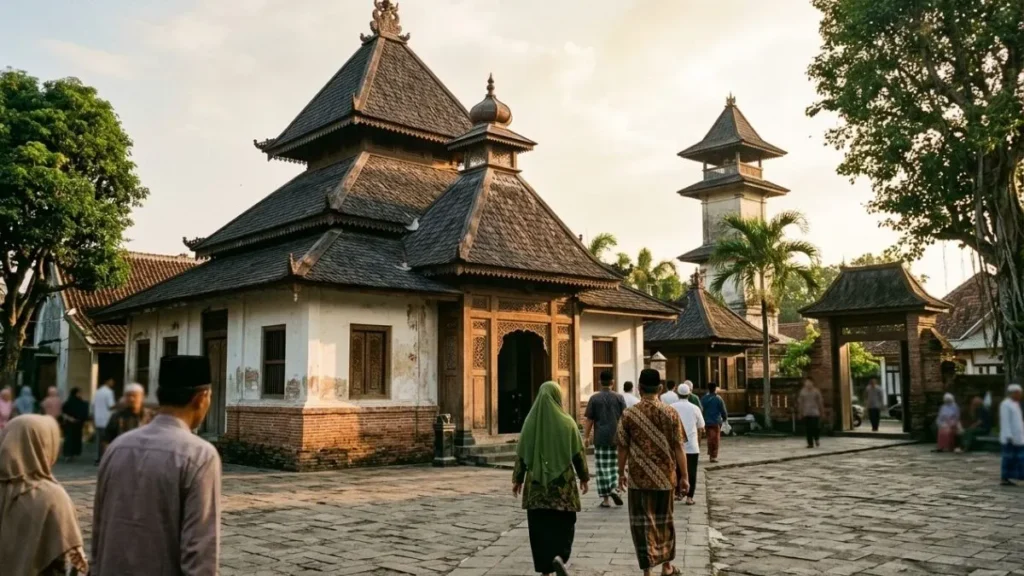
Wali Songo (“Nine Saints”) are nine revered Islamic missionaries credited with spreading Islam across Java in the 15th and 16th centuries. Rather than converting through conquest, they used wayang puppet shows, gamelan music, and existing Javanese customs to introduce Islamic teaching — a cultural approach still visible in Indonesian Islam today. Their tombs across East, Central, and West Java remain major pilgrimage sites, drawing millions of visitors annually.
Most religious conversions in world history came bundled with military conquest. Java’s shift to Islam largely didn’t — and the reason traces back to nine men who chose culture over the sword. For the wider context, see our Ultimate Guide to Understanding Indonesia.
Who Were the Wali Songo?
Wali Songo (also transcribed Wali Sanga) refers to a group of nine da’i (Islamic missionaries) credited with spreading Islam across Indonesia, particularly the island of Java, during the 15th and 16th centuries. The word combines Arabic wali (a saint or “friend of God”) with Javanese sanga or songo, meaning nine. While treated as a defined group of nine in Javanese tradition, historians note evidence suggesting fewer than nine were likely alive during the exact same period — the “nine” framing reflects religious tradition and the Babad Tanah Jawi chronicle more than a strict historical roster. Regardless, the Wali Songo remain the single most important concept in Indonesian Islamic history, and their teachings still shape the daily faith of Javanese Muslims today.
How Did the Wali Songo Actually Spread Islam?
Unlike conversions achieved through military campaigns elsewhere in history, the Wali Songo’s approach centered on cultural adaptation rather than confrontation:
- Adapting existing art forms. Sunan Bonang, a gifted musician among the nine, is credited with weaving Islamic teaching into gamelan music and wayang (puppet theatre) performances — forms Javanese audiences already loved and understood.
- Meeting people where they were. Rather than demanding an abrupt break from existing customs, the saints layered Islamic teaching onto familiar Javanese cultural practices, easing the transition for communities steeped in older Hindu-Buddhist and animist tradition.
- Building educational institutions. Sunan Ampel established the first pesantren (Islamic boarding school) at Ampel Denta in Surabaya, training the next generation of religious teachers, including several of his own students who later became Wali Songo themselves.
- Teaching accessible ethical codes. Sunan Ampel’s “Moh Limo” teaching — forbidding gambling, drinking, stealing, drug use, and adultery — offered a simple, practical moral framework rather than abstract theology alone.
- Winning respect through diplomacy, not force. Several Wali Songo figures gained genuine standing with existing Majapahit nobility, spreading influence through relationship-building rather than displacing the existing political order outright.
Where Are the Wali Songo Tombs Located?
Of the nine Wali Songo tombs, geographic distribution across Java breaks down clearly:
| Region | Number of Tombs | Example Saints |
|---|---|---|
| East Java | 5 | Sunan Ampel (Surabaya), Sunan Gresik/Malik Ibrahim and Sunan Giri (Gresik), Sunan Drajat (Lamongan), Sunan Bonang (Tuban) |
| Central Java | 3 | Located around the Demak–Kudus–Muria area |
| West Java | 1 | Located in Cirebon |
These sites cluster along Java’s north coast, where the Wali Songo were most active between the first half of the 15th century and the middle of the 16th century, transforming Surabaya-Gresik-Lamongan, Demak-Kudus-Muria, and Cirebon into major hubs of Islamic learning.
Why Do Millions Still Visit Wali Songo Tombs Today?
The tradition of ziarah (pilgrimage) to Wali Songo tombs remains a genuinely active practice, not a historical footnote. Academic research on religious tourism in Indonesia describes the Wali Songo pilgrimage as combining worship and tourism, drawing both domestic and international visitors and standing alongside sites like Borobudur and Lake Toba as a distinctive piece of Indonesian heritage. For many Javanese Muslims, visiting these graves isn’t simply sightseeing — it’s an active expression of faith and connection to the saints credited with bringing Islam to their ancestors, and demand for improved pilgrimage facilities and information continues to grow alongside Indonesia’s broader Islamic tourism sector.
Common Misunderstandings
“The Wali Songo were literally nine people active at the same exact time.” Historical evidence suggests the group wasn’t strictly simultaneous — the “nine saints” framing reflects Javanese religious tradition and chronicles like the Babad Tanah Jawi more than a precisely documented historical roster.
“Islam spread to Java through conquest, similar to other regions.” The Wali Songo’s approach relied heavily on cultural adaptation — absorbing existing Javanese art, music, and social customs — rather than military conversion, a pattern credited with Islam’s relatively smooth integration into Javanese life.
“Wali Songo pilgrimage is just a historical tourist attraction now.” For many Javanese Muslims, visiting these tombs remains an active, living expression of religious devotion, not merely a heritage or tourism activity.
FAQ
What does “Wali Songo” mean?
“Wali Songo” combines the Arabic word “wali” (saint or friend of God) with the Javanese word “songo” or “sanga,” meaning nine — referring to the nine revered missionaries credited with spreading Islam in Java.
When did the Wali Songo spread Islam in Java?
Most accounts place their activity between the first half of the 15th century and the middle of the 16th century, though some sources trace roots as early as the 13th–14th centuries.
How did the Wali Songo convert people without using force?
They adapted existing Javanese cultural forms — including wayang puppet theatre and gamelan music — to introduce Islamic teaching, and built relationships with existing Majapahit nobility rather than displacing them through conquest.
Where are the Wali Songo tombs located?
Five tombs are in East Java (Surabaya, Gresik, Lamongan, Tuban), three are in Central Java (Demak-Kudus-Muria area), and one is in West Java (Cirebon).
Can visitors go on a Wali Songo pilgrimage today?
Yes — the Wali Songo ziarah remains an active pilgrimage tradition, drawing millions of Indonesian and international visitors annually as both a religious and cultural tourism practice.
Conclusion
The Wali Songo’s lasting legacy isn’t just that Islam took root in Java — it’s how it did, through cultural fluency and adaptation rather than conquest, a pattern still visible in the blended, syncretic character of Javanese Islam today. Their tombs, still visited by millions each year, keep that history genuinely alive rather than confined to textbooks.
For related reading, see Kejawen: Java’s Quiet Mystical Tradition Explained and Religious Diversity in Indonesia Explained, or browse the full Beliefs & Spirituality pillar.