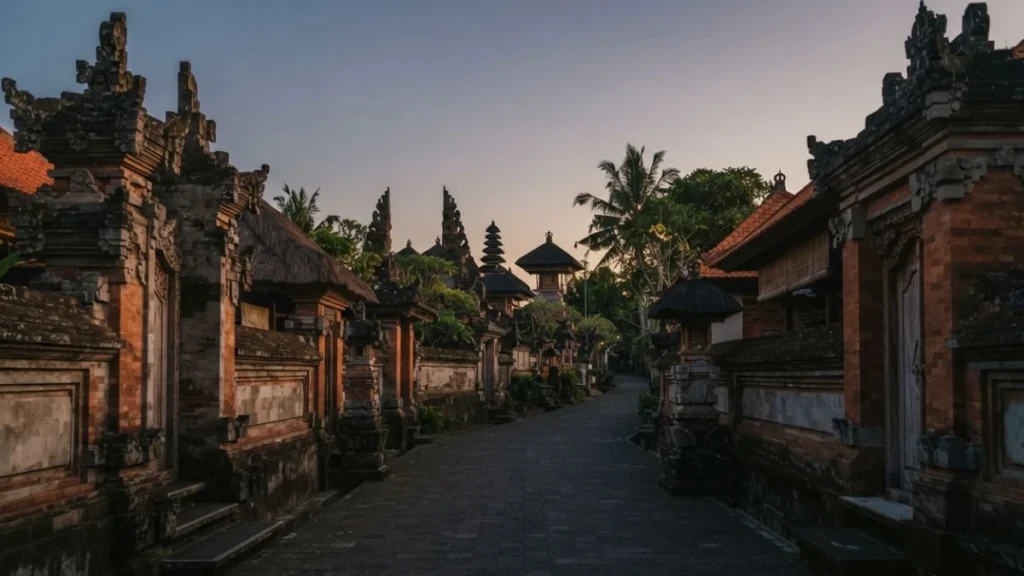
For 24 hours once a year, one of the world’s busiest tourist islands goes completely dark and silent. No flights land or take off. No cars or motorbikes move on the roads. No lights burn after sunset. Bali observes Nyepi, its Day of Silence, every year to mark the Hindu New Year — and it’s unlike almost any other holiday on Earth. For the wider context, see our Ultimate Guide to Understanding Indonesia.
Nyepi, also known as the Day of Silence, marks the Balinese Hindu New Year on the Saka calendar. Balinese Hindus observe it for a full day — 6 AM to 6 AM the next morning — through complete silence, fasting, and self-reflection. The word “Nyepi” comes from the Balinese word sepi, meaning quiet or silent. During Nyepi, the entire island of Bali comes to a standstill: airports close, businesses shut down, and even tourists must stay indoors and observe the silence, regardless of religion.
Why It Matters
Nyepi isn’t just a religious observance — it’s a full-island event that affects everyone in Bali, tourists included. Understanding it is essential for anyone visiting or living in Bali around this time, since travel, business, and even the ability to leave one’s accommodation are genuinely restricted for the entire day. Beyond the practical impact, Nyepi offers a striking window into how deeply Balinese Hindu philosophy shapes everyday life and how a whole community can collectively choose stillness over activity.
Cultural Context
Nyepi is rooted in Balinese Hinduism and centers on restoring balance between humans, nature, and the divine. The silence isn’t just symbolic rest — it’s traditionally believed to help “trick” evil spirits (Bhuta Kala) into thinking the island is uninhabited, protecting Bali from misfortune in the year ahead.
The day of silence itself is governed by four restrictions known as Catur Brata Penyepian:
- Amati Geni — no lighting fires or using lights
- Amati Karya — no working
- Amati Lelungan — no traveling
- Amati Lelanguan — no entertainment or indulgence, often observed as fasting
Nyepi is preceded by several days of vivid, very public rituals — a striking contrast to the silence that follows. Melasti takes place a few days before Nyepi, when Balinese Hindus dressed in white carry sacred temple objects in procession to the sea or sacred water sources for purification. On the eve of Nyepi, Tawur Agung Kesanga involves offerings and rituals at crossroads and homes, followed by the island’s most visually dramatic tradition: the Ogoh-ogoh parade, where towering effigies representing evil spirits and negative forces are paraded through the streets with gamelan music before often being ceremonially burned. The day after Nyepi is Ngembak Geni, a time for forgiveness and family visits, marking the start of the new year in a spirit of renewal.
Historical Background
Nyepi traces back to the Saka calendar, a lunar calendar system that scholars date to around 78 AD, associated in tradition with the legendary figure Aji Saka. The Saka calendar traveled from India through Java before reaching Bali, where it blended with local Balinese belief systems. Over time, the Balinese layered their own distinct practice onto the New Year observance — Penyepian, the specific tradition of complete silence — which is now the defining feature that sets Bali’s celebration apart from other New Year traditions influenced by the same calendar system elsewhere in the region.
Regional Differences
Nyepi is observed island-wide in Bali, but its intensity is most visible in areas with large Hindu populations and strong traditional village (desa adat) structures, where local pecalang (traditional security officers) actively patrol to enforce the day’s restrictions. In more tourist-dense areas like Kuta or Seminyak, hotels and resorts typically manage the observance for guests, keeping activity contained indoors while public spaces outside remain empty. Outside Bali, Nyepi is not a public holiday requiring the same restrictions, though it is still observed by Hindu communities elsewhere in Indonesia as a religious holiday.
Practical Guide
If you’re in Bali during Nyepi, here’s what to expect:
- Plan your travel dates carefully. Bali’s international airport closes completely for the full 24-hour period — no flights arrive or depart, so travel plans need to account for this in advance.
- Expect to stay at your accommodation. Leaving your hotel or villa is generally not permitted, except in genuine emergencies, and pecalang officers patrol streets to enforce this.
- Prepare for minimal or no internet/TV in some areas. Some regions restrict internet access or ask hotels to dim lights and cover windows to maintain the spirit of darkness and silence.
- Experience Ogoh-ogoh the night before. If you’re in Bali just ahead of Nyepi, the Ogoh-ogoh parade is a safe, spectacular, and welcoming event for visitors to observe.
Common Misunderstandings
“Nyepi only affects Hindus.” The restrictions apply to everyone on the island, tourists included, regardless of religion — it’s an island-wide observance, not just a personal religious practice.
“Nyepi is a quiet, low-energy holiday overall.” The days leading up to Nyepi, especially the Ogoh-ogoh parade, are loud, colorful, and highly energetic — the silence is a sharp, deliberate contrast to what comes before it.
“You can still go for a quick walk on the beach during Nyepi.” Travel of any kind, including short walks outside accommodation, is generally restricted during the 24-hour period, with limited exceptions for emergencies.
Nyepi is one of the most distinctive holidays in the world — a day when an entire island deliberately chooses total stillness as a form of spiritual renewal. For visitors, it offers a rare, almost otherworldly experience of quiet; for Balinese Hindus, it’s a profound act of purification and balance that sets the tone for the year ahead.
For related reading, see What Is Mudik? Indonesia’s Massive Annual Homecoming and Religious Diversity in Indonesia Explained, or browse the full Traditions & Festivals pillar.
FAQ
What happens during Nyepi in Bali?
The entire island observes 24 hours of silence, fasting, and no travel or work, following the four restrictions of Catur Brata Penyepian — no fire/light, no work, no travel, and no entertainment.
Can tourists leave their hotel during Nyepi?
Generally no — everyone on the island, including tourists, is expected to stay indoors for the full 24-hour period, with exceptions only for genuine emergencies.
Is the Bali airport closed during Nyepi?
Yes, Bali’s international airport closes completely for the entire 24-hour Nyepi period, with no flights arriving or departing.
What is the Ogoh-ogoh parade?
It’s a vibrant, loud procession held the evening before Nyepi, featuring towering effigies representing evil spirits, which are paraded through the streets and often ceremonially burned to symbolize the cleansing of negative energy.
When does Nyepi happen each year?
Nyepi follows the Balinese Saka lunar calendar, so its date shifts each year on the Gregorian calendar, typically falling in March.