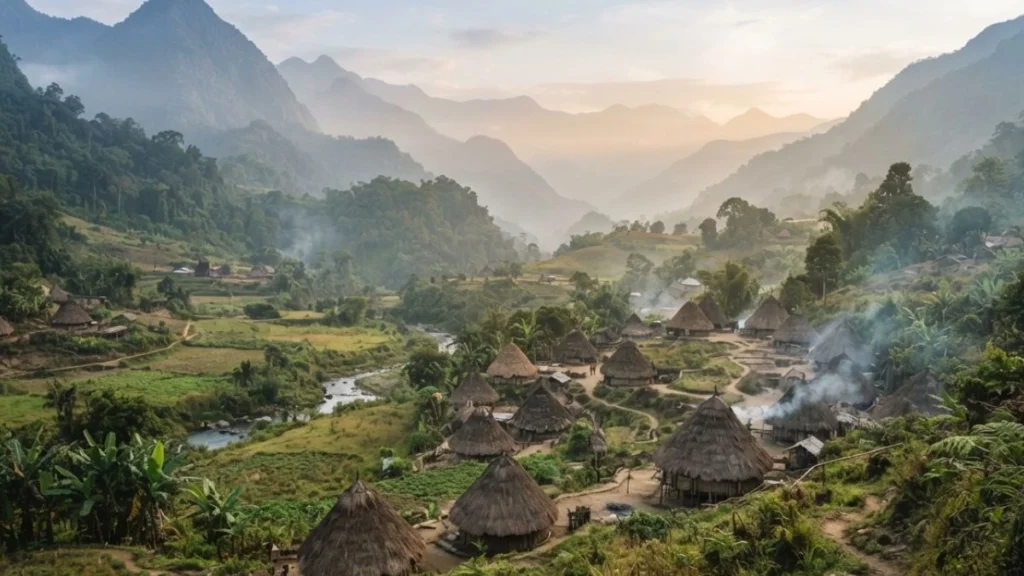
At the far eastern edge of the Indonesian archipelago, across a mountainous, jungle-covered landscape larger than most European countries, lives one of the most culturally and linguistically diverse populations on Earth — one that looks, sounds, and lives quite differently from most of the rest of Indonesia. Understanding papua culture identity means recognizing a genuinely distinct Melanesian heritage within an otherwise predominantly Austronesian nation. For the wider context, see our Ultimate Guide to Understanding Indonesia.
Papua refers to the Indonesian-administered western half of the island of New Guinea, now divided into several provinces. It’s home to an indigenous Melanesian population that is ethnically, linguistically, and culturally distinct from most of the rest of Indonesia. The region hosts an extraordinary number of separate indigenous groups — estimates range from roughly 250 to over 300 distinct tribes — each with its own language, customs, and traditions. Hundreds of local languages are spoken across the region, making Papua one of the most linguistically diverse places on the planet.
Why It Matters
Understanding Papua’s distinct identity is essential for grasping the full scope of Indonesian diversity — the country isn’t culturally uniform, and Papua represents perhaps its sharpest contrast, both ethnically (Melanesian rather than Austronesian) and religiously (predominantly Christian rather than Muslim-majority). Recognizing this distinctiveness also provides important context for the region’s unique social dynamics, including cultural preservation efforts and the complex relationship between indigenous Papuan identity and the wider Indonesian state.
Cultural Context
Papuan culture and identity is shaped by several defining features:
- Melanesian heritage — Papuans are ethnically part of the broader Melanesian family found across the western Pacific, distinct from the Austronesian ethnic majority found across most of the rest of Indonesia.
- Extraordinary tribal and linguistic diversity — hundreds of distinct tribes, including groups like the Dani, Lani, Yali, Asmat, and Marind, each maintain their own language and customs, with some languages spoken by only a few hundred people.
- Customary territorial groupings — tribes are often organized around traditional customary territories (adat regions), such as the Anim Ha area in southern Papua, home to groups like the Marind and the internationally recognized Asmat, celebrated for their distinctive wood carving art.
- Religion — Papua is predominantly Christian (Protestant and Catholic), introduced by Dutch missionaries beginning in the 1850s, though genuine acceptance grew mainly from the early 20th century onward, and traditional animist beliefs continue to persist alongside Christian practice, especially in more remote areas.
- Pig culture — as in much of wider Melanesia, pigs hold deep cultural and ceremonial importance, with pig feasts held to mark weddings, funerals, and other significant community events.
- Subsistence livelihoods — depending on region, Papuan communities rely variously on sweet potato and yam cultivation, sago gathering, hunting, and fishing, closely shaped by the area’s dramatically varied terrain, from coastal lowlands to high mountain valleys.
Historical Background
Papua’s interior remained largely unknown to outsiders well into the 20th century — the densely populated highland Baliem Valley, home to the Dani, Lani, and Yali peoples, wasn’t discovered by the outside world until 1938, despite having supported agricultural communities for thousands of years. Dutch colonial administration formally introduced Christianity to coastal Papua in the 1850s, though widespread acceptance didn’t take hold until decades later, and an organized Papuan Christian church structure wasn’t established until the 1950s. Following Indonesian independence, Papua remained under Dutch administration separately from the rest of Indonesia until the early 1960s, after which it came under Indonesian control through a United Nations-supervised process, a transition that remains a subject of ongoing historical and political discussion. In 2001, Indonesia introduced Special Autonomy status (Otonomi Khusus, or Otsus) for Papua, intended to grant the region greater control over its own affairs and better protect indigenous Papuan cultural, economic, and political interests, alongside institutions like the Majelis Rakyat Papua (Papuan People’s Council), formed in 2005 as a body of tribal leaders representing Papuan customary interests.
Regional Differences
- The Baliem Valley highlands are home to the Dani, Lani, and Yali peoples, who maintain deeply traditional highland agricultural practices and customs, celebrated annually at the well-known Baliem Valley Festival.
- Southern Papua (the Anim Ha customary region), including Merauke, Boven Digoel, Asmat, and Mappi, is home to groups like the Marind and the Asmat, the latter internationally recognized for elaborate ceremonial wood carving traditions.
- Coastal areas generally show greater historical outside contact and religious conversion, given easier accessibility compared to Papua’s mountainous interior.
- Remote interior regions remain home to some of the least externally contacted communities in the world, with a small number of groups believed to maintain minimal or no regular contact with the outside world.
- Urban centers like Jayapura have seen substantial migration from other parts of Indonesia in recent decades, creating a more ethnically mixed population alongside indigenous Papuan communities.
Practical Guide
If you’re interested in learning about or visiting Papua respectfully:
- Approach the region’s cultural diversity with humility, not generalization. With hundreds of distinct tribes, no single description captures “Papuan culture” as a monolithic whole — customs, languages, and traditions vary enormously by specific group and region.
- Consider visiting during the Baliem Valley Festival. This annual event offers a respectful, organized opportunity to witness traditional highland Dani, Lani, and Yali customs and ceremonies.
- Recognize the region’s genuine remoteness and sensitivity. Some interior areas remain difficult to access and culturally sensitive, and responsible, well-guided travel is strongly recommended over independent exploration of remote tribal areas.
- Support ethical, locally beneficial tourism. Engaging with community-run cultural experiences and respecting requests around photography and ceremonial participation helps ensure tourism benefits, rather than disrupts, local communities.
Common Misunderstandings
“Papuans are culturally similar to the rest of Indonesia.” Papuans are ethnically Melanesian, predominantly Christian, and linguistically distinct from the Austronesian, largely Muslim-majority culture found across most of the rest of Indonesia, making Papua one of the country’s most culturally distinctive regions.
“Papua has a single unified culture.” Papua is home to hundreds of separate tribes, each with its own language and customs — there is no single “Papuan culture” in the way one might generalize about more culturally unified regions.
“All of Papua has been fully explored and documented.” Some interior regions remain remote and difficult to access, and a small number of communities are believed to maintain minimal or no regular contact with the outside world even today.
Papua’s cultural identity stands as one of the most striking examples of diversity within Indonesia — a Melanesian, predominantly Christian, tribally organized society existing within a nation otherwise shaped by Austronesian heritage and Islamic majority culture. Understanding this distinctiveness offers a fuller, more accurate picture of just how varied Indonesia’s cultural landscape truly is, from one end of the archipelago to the other.
For related reading, see Toraja Funeral Tradition Explained and Indonesian Local Languages: How Many Are There, Really?, or browse the full Regional Cultures pillar.
FAQ
Is Papuan culture the same as the rest of Indonesia?
No — Papuans are ethnically Melanesian and predominantly Christian, distinct from the Austronesian, largely Muslim-majority culture found across most of the rest of Indonesia.
How many tribes live in Papua?
Estimates suggest Papua is home to roughly 250 to over 300 distinct indigenous tribes, each with its own language and customs.
What is the Baliem Valley Festival?
It’s an annual cultural festival celebrating the traditions of the Dani, Lani, and Yali highland peoples of Papua’s Baliem Valley, discovered by outsiders only in 1938.
What is Otsus (Special Autonomy)?
Otsus refers to Special Autonomy status granted to Papua by Indonesia in 2001, intended to give the region greater control over its own affairs and better protect indigenous Papuan interests.
Are there uncontacted tribes in Papua?
Some remote interior communities are believed to maintain minimal or no regular contact with the outside world, though exact numbers are difficult to verify.